
By 2035, Namibia is expected to become the world’s cheapest producer of green ammonia.
Green ammonia produced in Namibia could cost €693 per tonne (about N$13,800) by 2035, a new study shows.
The study, commissioned by the German Energy Agency and the Climate Neutrality Foundation, says this would make Namibian production far cheaper than future output in Europe.
By comparison, green ammonia made in Germany is projected to cost €1,130 per tonne (around N$22,500), even with expected technological improvements.
The study finds that Namibia could supply green ammonia up to 40% cheaper than European producers well into the future, positioning the country as a strong global exporter in the green hydrogen economy.
The study links Namibia’s cost advantage to its renewable energy conditions.
Electrolysers in Namibia can run for about 6 000 full-load hours per year, compared to roughly 4 000 hours in Germany. Namibia’s renewable electricity is also projected to cost about half of Europe’s.
These factors lower the cost of producing green hydrogen, the main input for green ammonia.
The report says Europe’s demand for climate-friendly fertiliser inputs is set to grow. Germany is considering a rule that would require 70% of ammonia used in fertiliser production to be green by 2035.
If adopted, the quota would make imports unavoidable.
The study identifies Namibia as one of the countries best positioned to supply Europe at competitive prices. It also finds that shipping costs have a minimal impact on the final price, noting that green ammonia from Namibia remains cheaper than European output even after conversion, storage, and maritime transport.
Europe is already preparing for a future where local ammonia production becomes less competitive.
The study estimates that Europe may need to import up to 75% of its future ammonia demand while keeping only a small domestic production base for energy security.
Last year, a report by five Oxford engineers modelled production costs at the Hyphen Hydrogen Energy project in Lüderitz.
Their findings painted a challenging picture, suggesting a levelized cost of hydrogen between €5.43 (about N$101.52) and €9.21 (around N$172.18) per kilogramme.
They noted that these costs, combined with higher development expenses, were projected to rise from over N$100 billion to N$220 billion.
The Namibian newspaper reported last year that the Namibia Investment Promotion and Development Board (NIPDB) suggested hydrogen prices could drop to N$27 by 2030.
The International Energy Agency (IEA) estimates production costs could be around N$48 for Namibia by 2030.
Namibia’s sixth National Development Plan (NDP6) targets the production of 1.3 million tonnes of green ammonia and 143 GWh of baseload electricity from green hydrogen each year by 2030. These targets support the country’s effort to build a green hydrogen economy and reduce dependence on fossil fuels.
By 2025, Namibia had attracted N$3.5 billion in investment commitments for green hydrogen projects, with N$1.6 billion already implemented.
The country aims to create 30 000 jobs across the hydrogen value chain and reach 30% local participation by 2030. Current projects include the Daures Green Hydrogen Project, Cleanergy Solutions Namibia, the Hyphen Hydrogen Energy Project, the Envision-Zhero Ammonia Plant, the Hydrogen De France initiative, and the HyIron Oshivela Project.
Caption
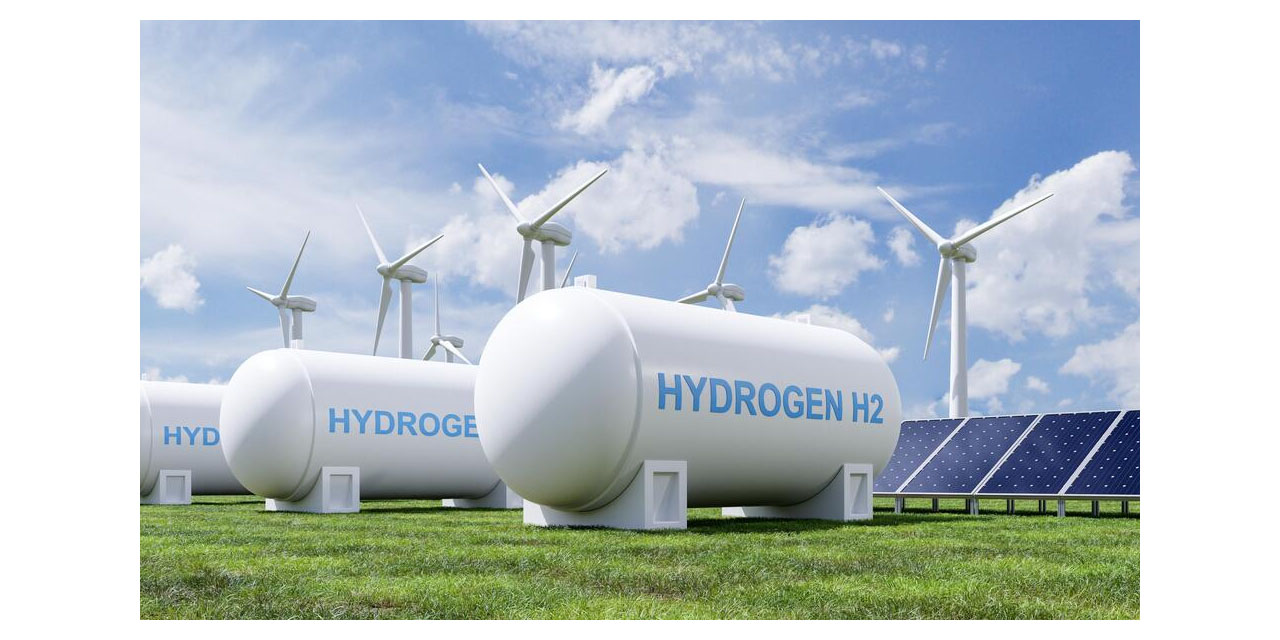
ON THE RISE: A new study positions Namibia as the country with the cheapest supply of green ammonia by 2035.
Photo: Contributed


