
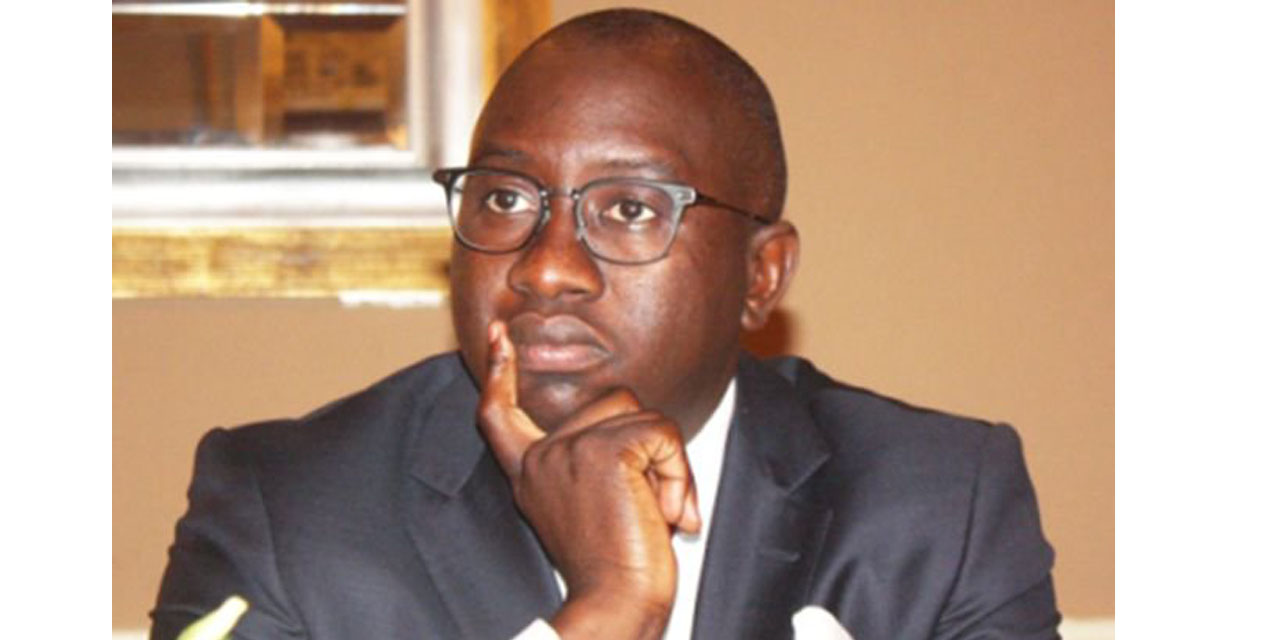
Justicia Shipena
“Why am I not legally represented as a former minister of state? What I would like to know, and this needs to be recorded, is why the state has money to give to prosecutors but not to us?”
These were the questions raised by former justice minister and fishrot accused Sacky Shanghala on Monday in the Windhoek High Court as the fishrot matter came before court for a hearing on the commencement of the trial.
Shanghala told the court that there was unequal treatment between the prosecution and the accused, saying funds were available for state prosecutors while legal aid funding for the defence remained out of reach.
He said this imbalance directly affected the right to a fair trial.
He also pointed out that co-accused Pius Mwatelulo had placed similar difficulties before the court, saying low legal aid rates made it impossible to secure proper legal representation.
Shanghala said information circulating in the media and in correspondence between the state and the executive director in the Ministry of Justice suggested that special remuneration arrangements had been made for state prosecutors Ed Marondedze and Clive Lutibezi, who are handling the Fishrot case.
He claimed the two prosecutors were set to receive a package of about N$1.5 million, which he said was roughly N$430 000 more than the salary of the secretary to Cabinet.
Shanghala questioned whether similar arrangements had been made for the presiding judge, arguing that if the complexity of the case justified enhanced pay for prosecutors, the same logic could apply elsewhere.
He asserted that the matter pertained to the fundamental principles of constitutional rights.
“It is the fair trial issue, Judge. Article 12, parity of arms,” Shanghala said, adding that the situation affected legal aid counsel and undermined equality between the prosecution and the defence.
He cautioned that these arrangements could potentially transform prosecutors from court officers into vigilantes, motivated by high-paying key performance indicators rather than the pursuit of justice.
The presiding judge, Marilize Du Plessis, responded that she was not aware of any special payment arrangements for prosecutors.
He said that if they failed to secure the release of their estates under the preservation order, they would be forced to rely on legal aid.
“Representation is not just representation for the sake of representation. It is competent representation,” Shanghala said.
He argued that competent legal representation requires remuneration that allows counsel to leave other matters and focus on the case. He said the state itself had described the Fishrot matter as highly complex.
“This is a matter with about 340 witnesses and more than 165 000 folios,” Shanghala said, adding that the state had ensured its own prosecutors were adequately remunerated to deal with the scale of the case.
He questioned why the issue of legal representation should be considered irrelevant when the imbalance in resources directly affected the accused’s ability to defend themselves.
“If the court wants to do justice and fairness, it must enquire whether it is possible to address these issues,” he said, recalling earlier discussions before another judge on whether the state had engaged the accused on legal representation and the adjustment of legal fees.
Shanghala also questioned why applications to release estates to fund legal representation were opposed when, according to him, the state had previously discussed legal fees.
“When a person raises that their rights are being infringed by a trial proceeding in a haphazard manner, without the ability to be properly and adequately represented, the court must act,” he said.
He again questioned why similar arrangements appeared to exist for state prosecutors but not for him and other accused persons.
Shanghala suggested that the court could consider subpoenaing the office of the prosecutor general to explain why prosecutors were paid higher rates while defence legal accounts were treated differently.
Du Plessis is expected to deliver her decision on Wednesday regarding the trial start date.
Shanghala and his co-accused, including Mwatelulo, Ricardo Gustavo, Bernhardt Esau, Tamson Hatuikulipi, Mike Nghipunya, Nigel van Wyk, Otneel Shuudifonya and Phillipus Mwapopi, face charges of corruption, fraud and racketeering.
The state alleges that they assisted the Icelandic fishing company Samherji to secure Namibian fishing quotas through corrupt means.


