
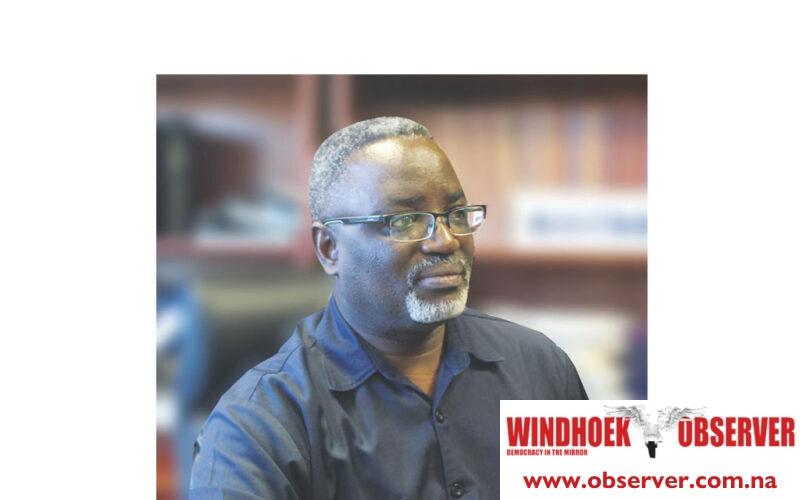
PAUL T. SHIPALE (with inputs by Folito Nghitongovali Diawara)
The passing of liberation struggle veteran Kanana Hishoono is a moment of deep reflection and collective remembrance as the nation prepares to bid him farewell at his second memorial service that will be held on Friday the 23rd of January, ahead of his burial on Saturday the 24th at the Eenhana Memorial Shrine.
This solemn period is not only about mourning a respected elder of the struggle but also about reflecting on the values that defined his life and the broader meaning of liberation itself.
Indeed, Africa’s liberation veterans occupy a sacred place in the continent’s history. They carried the weight of oppression, exile, and war so that future generations might live with dignity and freedom. Many gave their youth, their families, and in some cases their health and peace of mind. That sacrifice cannot be erased, minimised, or forgotten. But history also asks something of those it honours.
Liberation was an act of humility and service
During the struggle, leadership was not about privilege or permanence. It was about service. One walked with the people, not above them. Leaders listened because survival depended on listening. Authority came from sacrifice, not from titles.
That humility gave the liberation movements their legitimacy. It was not granted by force nor sustained by slogans but earned daily through discipline, courage, and moral clarity.
I vividly remember when elder Kanana Hishoono was posted to Cuba, at the “Isla de la Juventud”, where he became SWAPO’s branch secretary. At the time, I served as his secretary for information and mobilisation.
One day, we received the newly appointed Swapo representative to Cuba, Latin America and the Caribbean, the late Peter Tshirumbu Tsheehama. On that occasion, I witnessed an act of humility that left a lasting impression on me. I saw the late Hishoono taking Tsheehama’s shoes and began polishing them.
This was one of the founding members of SWAPO, a man who had served as branch secretary in Tsumeb during the labour contract system and who ensured that people such as the late President Hage Geingob and the late Linekela Kalunga went into exile. Yet here he was, humbly polishing the shoes of someone younger than him, simply because that person was the leader at the time and therefore deserved respect.
This moment raises a critical question: does the spirit of humility from the struggle still guide our leadership today?
Humility is not seasonal
Humility is not something to be displayed during election campaigns, party rallies, or commemorative anniversaries. It is not a posture adopted when public approval is needed and abandoned once power is secure.
True humility is a daily discipline. It is revealed in how decisions are made, how criticism is received, how institutions are respected, and how the weakest citizens are treated, especially when there are no cameras and no applause.
When humility becomes a political tool rather than a moral principle, it loses its meaning. Worse still, it is sometimes performed to please those who themselves lack humility in their hearts. That is not service; it is a distortion of the very values for which liberation was fought.
Liberation credentials do not expire but they do not rule forever either
Liberation veterans deserve honour, but honour is not the same as unchecked authority. No generation, however heroic, can govern indefinitely on the basis of past sacrifice alone.
Legitimacy is not inherited. It is renewed or lost through daily conduct. A movement that once fought injustice must be careful not to become resistant to accountability. A veteran who once challenged oppression must be careful not to dismiss dissent. Being questioned is not betrayal. It is democracy speaking and a call for renewal.
Listening is not weakness
Liberation leaders once listened because listening was survival. Today, listening remains essential not to maintain power, but to preserve legitimacy.
Consider the young graduate who has done everything asked of them – studied, trained, complied – yet remains without work, not for lack of effort or talent, but because opportunity is constrained by systems that reward proximity to power rather than merit. Their frustration is quiet, respectful, and patient, but it deepens each year they are told to wait while history is celebrated around them.
Consider also public institutions – hospitals, schools, and courts – where files go missing, equipment fails, and capable professionals work with demoralisation rather than pride. The nurse, the teacher, the clerk, and the administrator know what must change. The citizens who depend on these institutions feel the consequences daily. Yet dysfunction persists, not because solutions are unknown, but because institutions weakened by politicisation and fear no longer protect those who speak honestly.
And consider the ordinary citizen who lowers their voice when discussing public affairs, choosing silence over criticism not out of disloyalty, but out of caution. When citizens fear that questioning power may carry consequences, democracy becomes fragile, even if elections are held and slogans are repeated.
A leadership that no longer listens begins to rule by memory instead of reality. It governs by recalling yesterday’s victories while failing to address today’s struggles. Youth unemployment, institutional decay, inequality, and the quiet erosion of civic trust cannot be solved by history alone.
To listen again is not to surrender authority; it is to restore it.
A call to conscience
This reflection is not a call for resignation, but a call for renewal and to remember that liberation was not only about removing colonial rule, but about restoring dignity, justice, and accountability.
A call to practise humility daily, not symbolically.
A call to serve the people, not manage them.
A call to resist the temptation of entitlement to power.
Africa does not ask its liberation veterans to disappear. It asks them to lead once more by example. I am still deeply touched by the passing of the Founding Father as we approach the first commemoration of his passing on February the 8th. He was not just my boss and my leader but also a father who was humble, accessible and full of empathy and an inborn emotional intelligence.
He was truly a mentor with an ability to identify potential in others and deploy them accordingly. He could give advice and defend those who were loyal to him.
In my personal recollections of Namibia’s Founding Father, Dr Sam Nujoma, I tried to highlight his visionary leadership, fatherly guidance, commitment to liberation and unity, and mentorship while sharing memories from working with him directly, meeting him at his homestead, or being inspired by his legacy, focusing on his emphasis on following procedures, promoting youth, and his dedication to a free, independent Namibia.
I also recall him as a father figure who identified potential and groomed leaders, emphasising discipline and following proper channels. We remember his visionary leadership and his foresight, dedication to youth empowerment, cultural preservation, and building a strong, independent nation. How can we forget his abstemious lifestyle and preference for simpler living, even after his presidency? His vision extended beyond Namibia’s borders, inspiring broader African liberation and unity.
The liberation struggle is not complete simply because flags were raised and anthems were written. It is completed when power remains a responsibility, not a possession, and when humility remains a principle, not a performance.
The same courage that defeated oppression is now needed to confront complacency and moral fatigue. This is the final, most difficult phase of liberation: to serve without entitlement, to lead without arrogance, and to step aside when service demands renewal.
That, too, is victory. Indeed, anyone entering most Namibian towns today is greeted by seas of corrugated iron and plastic sheet structures. These are not just “eyesores”, as some dismissively label them. They are human settlements born out of policy failure, corruption, and institutional failure. They reflect a system where councils chase revenue through land auctions instead of fulfilling their constitutional mandate to plan inclusive, accessible towns.
Minister Sankwasa’s intervention by banning the auctioning of land by local authorities should therefore be applauded, as it is timely and sets the right tone for service delivery. He has taken a bold step by challenging a system that has benefited the few at the expense of the many. He deserves commendation for recognising the root of the housing crisis and confronting it directly. We do agree with those saying that land governance reform is no longer optional; it is urgent. If we fail to act now, we will cement a future where exclusion is normalised and opportunity is fenced behind auction gates. Land is a public trust, not a private jackpot.
As the older generation is passing on, let us keep that fire and old wood burning. Let the spirit of humility that guided our leaders during the liberation struggle continue to guide us today. Let the loyalty and example of veterans such as Kanana Hishoono continue to inspire us to deliver better services to our people. May we all be granted fortitude during this time of mourning this irreparable loss, and may his soul rest peacefully and rise in glory.
Disclaimer: The opinions expressed here do not necessarily reflect those of our employers or this newspaper but solely our personal views as citizens and pan-Africanists.


