
Justicia Shipena
Cancer Association of Namibia (CAN) chief executive officer Rolf Hansen says technology and innovative service models must be used to close gaps in cancer care where human capacity is limited.
Hansen made the remarks as Namibia joins the rest of the world today to mark World Cancer Day under the theme “United by Unique”.
He said access to early screening and diagnosis remains difficult, especially in remote and rural areas, where patients often travel long distances to Windhoek for specialist care.
He said technology can help reduce these barriers and shorten delays in treatment.
“We acknowledge that receiving the right screening and timely diagnosis in remote settings is difficult. We must therefore embrace technology and innovative service models to bridge the gaps where human capacity is limited. Cancer turns one’s world upside down. It shakes family foundations and tests the strength of communities. Our goal is to balance equitable access to healthcare with compassion, dignity, and financial protection for those affected,” Hansen said.
World Cancer Day is observed globally on 4 February and is led by the Union for International Cancer Control.
This year’s focus highlights how distance and financial hardship continue to block access to timely cancer care and calls for people-centred health services that recognise individuals, not just diseases.
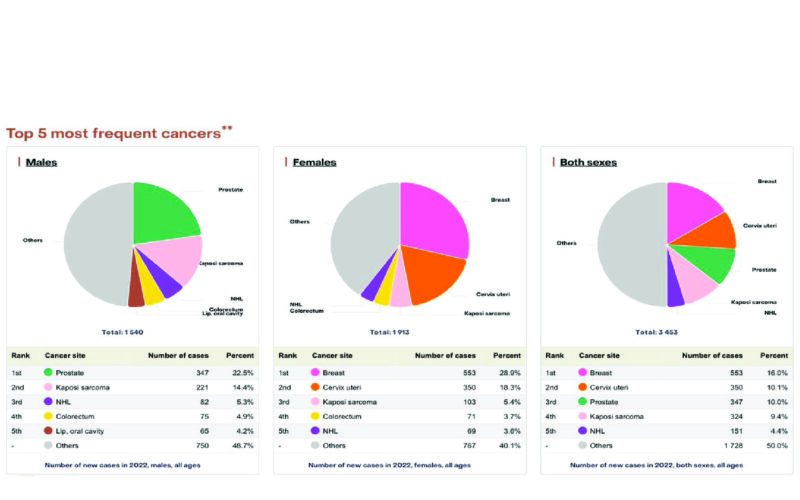
Recent data shows Namibia is facing a steady rise in cancer cases.
New cases are increasing by about 12% each year, with around 4 000 new diagnoses annually.
Estimates suggest more than 25 800 people are affected by cancer, including those newly diagnosed, those in treatment, and those living with long-term effects. Cancer remains a major public health challenge, with about 350 new cases and more than 200 deaths recorded each year.
CAN said Namibia’s geography presents serious healthcare challenges. Specialist cancer services remain largely centralised, placing a heavy burden on patients and families who must travel long distances and cover high costs, often delaying care.
To bring care closer to communities, CAN announced the opening and handover of the Walvis Bay Oncology Centre to the Ministry of Health and Social Services on 23 February 2026.
The centre, based at Walvis Bay District Hospital, was developed with support from Langer Heinrich Uranium. It includes renovated facilities, medical and pharmaceutical equipment, and specialised training delivered with the Dr AB May Cancer Care Centre in Windhoek.
CAN will also open the Palliative Care Namibia–Erongo Center in Swakopmund on 20 February 2026 to expand support for patients and families in the region.
“Timely interventions – from screening and diagnosis to treatment and palliative care – must become accessible realities for all Namibians, not privileges for a few,” Hansen said.
The current World Cancer Day campaign running from 2025 to 2027 places people and their lived experiences at the centre of cancer care.
The approach involves individuals, families and communities in how health services are planned and delivered, while taking culture, social conditions and personal needs into account.
Cary Adams, chief executive officer of the Union for International Cancer Control (UICC), said listening to people affected by cancer is key to improving care.
“When we listen to people affected by cancer, their experiences reveal what is often missing: clear communication, continuity of care, psychosocial support, and cultural sensitivity,” Adams said.
UICC president Ulrika Årehed Kågström said people-centred care improves outcomes and strengthens trust in health systems but requires political will to become standard practice.
Africa’s cancer burden
The World Health Organization (WHO) also warned on Tuesday that cancer is no longer a silent crisis in Africa but a growing public health emergency.
WHO regional director for Africa Dr Mohamed Janabi said cancer can be prevented, detected earlier and treated more effectively, but access remains unequal across the continent.
He said cancer is becoming one of the leading causes of premature death in the African region, with more than one million new cases diagnosed each year and close to one million deaths recorded annually.
Janabi said many lives are lost not because solutions do not exist, but because people lack access to early detection, timely treatment and financial protection. He said cancer also places pressure on families, weakens health systems and slows economic progress, with the poorest communities carrying the heaviest burden.
He noted progress in some countries, including expanded HPV vaccination, stronger cervical cancer screening, better childhood cancer care and the integration of palliative care into routine services.
However, he said major gaps remain. Late diagnosis is common, treatment is often disrupted, specialised health workers are in short supply, and access to radiotherapy, pathology services and essential cancer medicines remains limited. For many families, the cost of care is still unaffordable.
“This is not acceptable,” Janabi said.
He called for greater investment in proven interventions such as HPV vaccination, effective screening tests, decentralised treatment, stronger surgical and radiotherapy services, reliable access to essential medicines and early integration of palliative care.
Janabi said progress should be measured by lives improved and saved, not by policies alone.
He urged governments to prioritise cancer control, donors to support sustainable programmes, health workers to continue delivering care with skill and compassion, and cancer survivors to act as advocates.
He said Africa can change the course of cancer with strong political will, increased domestic investment and a firm commitment to equity, and that no one should be left behind in the fight against the disease.
Globally, cervical cancer remains the fourth most common cancer among women, with an estimated 660 000 new cases recorded in 2022. Nearly 94% of the 350 000 deaths that year occurred in low- and middle-income countries.


