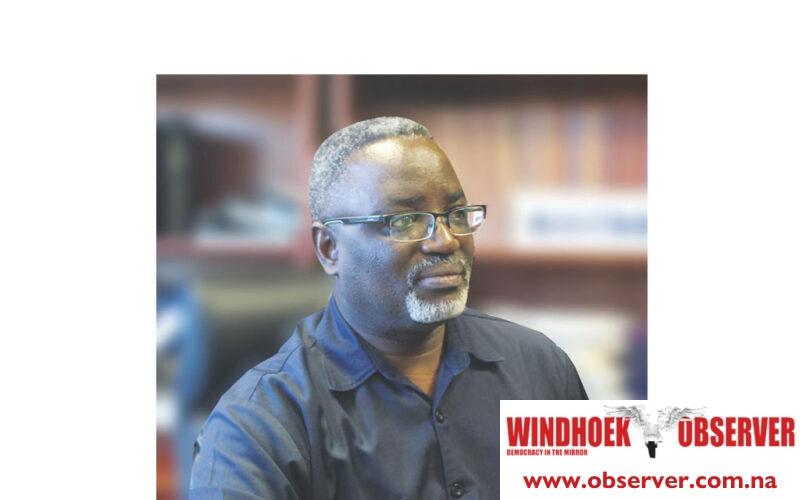
PAUL T. SHIPALE (with inputs by Folito Nghitongovali Diawara Gaspar)
Every 9 February, Namibia marks Constitution Day with speeches, symbolism, and celebration. Yet a constitution is not honoured by ritual alone. Its true test lies not in anniversary tributes, but in how faithfully it restrains power, protects dignity, and guides governance when political interests are at stake. Constitution Day should therefore be less about comfort and more about conscience.
The constitutional amendments of 2014 were a masterstroke executed not against the Constitution, but through it. Their camouflaged protagonists acted lawfully, strategically, and with full awareness of the consequences, including by those who understood the Constitution most intimately. What occurred went largely unnoticed at the time, yet its effects continue to shape Namibia’s democratic landscape.
Namibia’s Constitution was never meant to be decorative. It was conceived as a guardrail against excess, a shield for citizens, and a moral framework for state authority. To commemorate it honestly requires confronting moments when its spirit has been diluted not through open defiance, but through legal manipulation and political dominance. Sometimes, the most consequential constitutional ruptures arrive dressed as reform.
A Constitution designed to limit power
Adopted at Independence on 9 February 1990, Namibia’s Constitution emerged from collective deliberation and political compromise. Founding President Sam Nujoma is rightly revered as Founding Father, but the Constitution itself was crafted through the Constituent Assembly, chaired by Dr Hage Geingob, rightly called the architect of the Namibian Constitution, and shaped by principled leaders such as Daniel Tjongarero, Pashukeni Shoombe, John Ya-Otto, and respected jurists including Arthur Chaskalson and many of those who are present today, such as Peter Katjavivi, Pendukeni Iivula-Ithana, Kaire Mbuende and many others.
Their achievement was not merely to establish government but to constrain it.
Human dignity, equality before the law, democratic accountability, separation of powers, and judicial independence were placed at the centre of the new Republic. The Constitution assumed what history repeatedly confirms: unchecked power eventually erodes justice.
That founding wisdom makes later constitutional developments, particularly those of 2014, impossible to ignore, especially given that they were made by the very people who ironically are believed to be the architects of our constitution, hailed as progressive and special.
The 2014 amendments and the question of intent
In August 2014, Namibia adopted sweeping constitutional amendments that fundamentally altered the balance of political power. Parliament was expanded significantly, increasing the number of National Assembly members beyond what functional necessity required. The office of vice president was created through constitutional amendment rather than popular mandate. Presidential appointments to the legislature were increased, further diluting electoral accountability. The Namibia Central Intelligence Service was entrenched in the Constitution, elevating an executive security organ to constitutional status.
Formally, the process complied with Chapter 19. Substantively, it raised serious democratic concerns.
These changes were enabled not by broad national consensus, but by parliamentary supermajority. There was no referendum, minimal public engagement, and little meaningful deliberation beyond party structures. The amendments strengthened the executive, enlarged the political elite, and weakened institutional counterweights designed to restrain power.
By constitutional coup, this article does not mean an illegal seizure of power. It refers instead to a coup de palais, the deliberate reconfiguration of constitutional architecture to entrench executive dominance while preserving formal legality. What unfolded in 2014 was not unlawful, but it was constitutionally transformative in a manner that strained democratic legitimacy.
More troubling was the process itself. Subsequent disclosures indicated that the Law Reform and Development Commission was not properly constituted during critical stages of drafting. Public consultation was thin. Plural voices were marginalised. Constitutional change became an elite-driven exercise rather than a national conversation. Legality was observed. Legitimacy was strained.
When the law permits what democracy should question
The Constitution allows amendment, but it does not endorse abuse. A system that permits those in power to reshape constitutional rules primarily for their own advantage risks hollowing out democracy from within, leaving institutions intact in form but altered in spirit.
Namibia is not unique in this regard. Across democracies from Eastern Europe to parts of Africa, executive power increasingly expands not by breaking constitutions, but by bending them. The danger lies precisely in this subtlety.
Correcting the 2014 amendments today faces a fundamental obstacle political self-interest.
Any reversal would require action by those who benefit most from the current arrangement. History offers little evidence that power willingly limits itself once constitutional engineering has normalised excess.
Yet Namibia’s own experience also shows that resistance is possible.
Civic pushback and democratic precedent
There have been moments when constitutional vigilance prevailed. In 2016, public mobilisation and legal scrutiny halted an attempt to override a Supreme Court ruling on citizenship through ordinary legislation. More recently, last year in 2025, sustained opposition to the Petroleum Amendment Bill, criticised for centralising resource control within the Presidency has slowed efforts to weaken institutional oversight.
These episodes demonstrate an essential truth: constitutional erosion is not inevitable. Even after a “silent coup”, democratic repair remains possible when citizens, lawyers, media, civil society, and opposition forces act together as a constitutional firewall.
Where the Constitution Is Quietly Undermined
The most persistent constitutional failures in Namibia do not occur through dramatic acts. They happen quietly, through routine governance:
• Human dignity is tested by police brutality, degrading detention conditions, and abuse of authority.
• Equality before the law is weakened by gender discrimination, social exclusion, and uneven enforcement.
• Personal liberty suffers through arbitrary arrests and prolonged pretrial detention.
• Fair trial rights erode under systemic delays and overcrowded courts.
• Administrative justice is undermined by arbitrary decisions in land allocation, licensing, and access to public services.
• Property and land rights are strained when reform bypasses lawful procedure.
Each violation may appear isolated. Together, they corrode trust in the constitutional order often more effectively than any single amendment ever could.
The Constitution as Ethical Anchor
Namibia inherited the Roman-Dutch law, valued for structure and predictability. But inherited legal systems are not neutral. They often fail to reflect lived realities or address historical injustice adequately. The Constitution corrects this by subjecting all law – statutory, customary, and common – to higher values: dignity, equality, accountability, and democracy.
In this sense, the Constitution is more than a legal framework. It is the Republic’s moral compass, one that can be deliberately reoriented if vigilance fades.
The path forward is political, not theoretical
Restoring constitutional balance will not come from goodwill alone. It requires:
Sustained civic education and public mobilisation.
Strategic litigation that defends not only constitutional text but also constitutional purpose.
Broad coalitions across political parties, professions, labour, and civil society. Continuous democratic engagement through Parliament, media, and informed public discourse. Constitution Day should therefore prompt difficult questions.
For those entrusted with constitutional guardianship, do they recognise that undermining constitutional restraint ultimately weakens the Republic itself?
For citizens, how do we ensure that dignity and equality are lived realities, not ceremonial slogans?
Vigilance, not reverence
The strength of a nation is not measured by the elegance of its Constitution but by the fidelity with which it is lived. Namibia’s experience shows that constitutions can be weakened without being broken, emptied of spirit while retaining form, sometimes by those entrusted to protect them.
That is why Constitution Day must be more than a celebration. It must be an occasion for scrutiny, memory, and resolve. Democracy survives not on admiration alone, but on vigilance, especially when the law is bent quietly, politely, and in full compliance with procedure.
Admiration is easy. Vigilance is the price of constitutional freedom.
Disclaimer: The opinions expressed here do not necessarily reflect those of our employers or this newspaper but are solely our personal views as citizens and pan-Africanists.