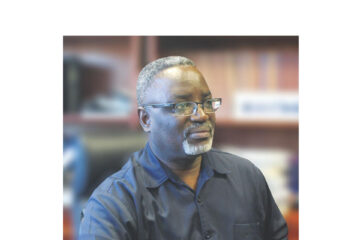
PAUL T. SHIPALE (with inputs by Folito Nghitongovali Diawara Gaspar)
Every year, the United Nations overwhelmingly condemns the U.S. embargo on Cuba. Every year, 187 nations vote against it. Every year, nothing changes.
If 187 voices cry “wrong”, but the powerful continue as if the world never spoke, is that international law or theatre? And if it is theatre, who is the audience? And the joke is on whom? There is currently a human-generated humanitarian crisis taking place in Cuba, and Russia has warned that Cuba’s energy crisis is becoming critical because of the United States using “suffocating measures” against the socialist island state. Kremlin spokesman Dmitry Peskov raised the alarm on Monday.
Indeed, Cuba is reeling after the US cut off oil shipments from Venezuela, following the abduction of Venezuelan President Nicolas Maduro by US forces during a bloody night raid in early January.
The USA has also threatened to impose tariffs on other countries, including Mexico, if they continue to ship much-needed fuel to Cuba, which has already suffered under decades of punitive sanctions imposed by Washington.
Cuba’s crippling fuel shortage amid US attempts to strangle the economy has immobilised the nation, and power plants are struggling to keep the lights on. We hear that the Cuban government has been forced to impose emergency measures, including a four-day workweek for state-owned companies, limiting fuel sales, shuttering universities and reducing school hours. Cuba has also warned international airlines that jet fuel would no longer be available on the island from Tuesday 10 February.
For weeks, Moscow has railed against Washington’s campaign against Havana. Russia has also called the US moves against Cuba “unacceptable”, while the United Nations Secretary-General Antonio Guterres has warned of a humanitarian “collapse” in Cuba if the country’s energy needs go unmet.
In addition, defying the USA, Mexican President Claudia Sheinbaum said that sanctions that harm the people of Cuba were “not right”. “You cannot strangle a people like this. It’s very unfair, very unfair.” She said. Mexico was Cuba’s second-largest oil provider after Venezuela. Is This Really Bilateralism?
Washington calls the embargo on Cuba a “sovereign, bilateral matter”. Yet Mexican companies face fines for sending fuel, European banks are penalised for processing lawful transactions, and African and Asian firms are warned that trading with Cuba could cost them access to the dollar system.
Is that bilateral? Or is it economic coercion by another name? If one state can punish others for pursuing independent trade, are we living under international law or under a single nation’s diktat?
What happened to the “rules-based order”?
We are told to defend a “rules-based international order”. But which rules?
• The rule that sanctions require collective legitimacy through the UN Security Council?
• Or the rule that powerful states may ignore multilateralism when it suits them?
If only the strong can impose sanctions, what separates law from leverage?
When does pressure become collective punishment?
Fuel shortages. Hospitals are running out of medicine. Infrastructure collapse. Financial isolation. Pregnant mothers dying, children being deprived of food and medicine, and yet the world is quiet? When sanctions harm civilians more than the elites who design them, can this be called “targeted”?
If extraterritorial sanctions discourage the shipment of medicine or fuel, is this “pro-democracy”? Or is it punishment disguised as policy?
Where is the global response?
Mexico and Canada, who for years traded with Cuba and now Europe, Africa, and Asia, are all warned, all threatened. And yet the world’s reaction is mostly statements.
Where are coordinated countermeasures? Where is the International Court of Justice advisory opinion? Where is the Namibian government and the association of former students trained in Cuba? Where is our newly appointed ambassador to Cuba? Does he, by the way, know anything about Cuba and Latin America and the Caribbean Islands, otherwise known as the West Indies? Where are our former ambassadors to Cuba?
If sovereignty matters, why is it not defended collectively? If international law is being stretched, why are its defenders silent?
The human cost
This is not abstract. Hospitals struggle for fuel. Medicines are delayed. Ordinary people suffer.
Meanwhile, Cuba, which sends doctors to fight epidemics, engineers to rebuild communities, and aid to international liberation efforts, is punished for daring to trade normally. Who will forget how the Cubans sent troops to Angola and single handedly defeated the apartheid regime at the battle of Cuito Cuanavale? Where would Southern Africa be if it weren’t for Cuba?
Where is the solidarity beyond speeches and commemorations? Today Cuba stands alone, and a genocide is being committed. Tomorrow, who? If extraterritorial sanctions become normal, no state is safe. Any nation pursuing independent trade risks the same fate.
If global commerce can be weaponised without consequence, is any economy truly independent? Is this a multipolar world or a financial hierarchy?
Law or power?
If sanctions are lawful tools of accountability, then accountability must be reciprocal.
A small state violating international norms faces consequences. If a powerful state does the same, what happens? Silence? Resolutions? Expressions of “concern”?
When law binds only the weak, it is not law; it is hierarchy.
The final question
When 187 nations vote and nothing changes, who is diminished, the United States or the authority of the United Nations itself? Silence is complicity. Inaction is a precedent. The balance of power is shifting, and justice cannot wait.
If sanctions are instruments of law, they must apply to those who wield them. If they are instruments of power, then stop pretending they are neutral.
Call to action
The world is watching. Cuba stands resilient, alone. Justice cannot wait. Raise your voice not with whispers, but with demand. No more unilateral power silencing sovereignty. No more civilians punished for policies they did not choose.
Today Cuba. Tomorrow, any nation that dares to act independently. Who sanctions the sanctioner? Quis custodiet ipsos custodes?
Disclaimer: The opinions expressed here do not necessarily reflect those of our employers or this newspaper but are solely our personal views as citizens and pan-Africanists.