
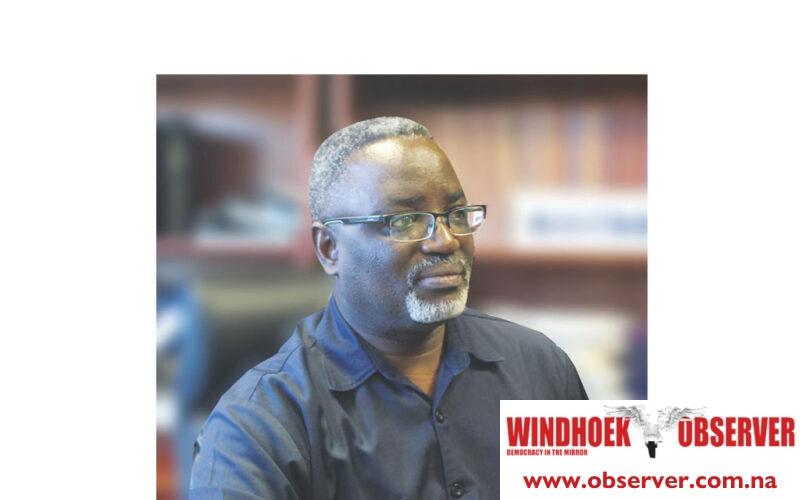
Paul T. Shipale (with inputs by Folito Nghitongovali Diawara Gaspar)
There is a Swahili saying that cuts to the heart of our modern predicament: “Wakala huona tu kile anacho uwezo wa utambuzi wa kuona.” Translated, it means an agent only sees what they have the cognition to see. For decades, the world has looked at Africa and seen only what its limited cognition allowed: a continent of problems, not solutions; of resources, not resourcefulness; of people to be saved, not partners to be respected. That blindness ends now.
When the spotlights dimmed on the 39th African Union Summit, something fundamental shifted, not merely in the communiqués or the ceremonial photographs but in the collective consciousness of a continent that has finally cured itself of the disease of asking permission. What emerged from Addis Ababa was not another gathering of supplicants. It was a declaration: Africa will no longer be what the world has the cognition to see. We will show you what we are.
And the choice for the world, for the United Nations, for Washington, for Brussels, and for Beijing could not be starker: open the door, or prepare for open war.
Not a war of muskets and missiles, though those remain possibilities. But war of sovereignty against subjugation. War of dignity against dependency. War of a people who have finally remembered their own name against an international system that has spent centuries trying to make us forget it.
The hypocrisy that breeds revolutions
Let us name the wound at the heart of the global order: democracy is preached, but oligarchy is practised. Rules are universal only until they inconvenience the powerful.
The same nations that sanctify “democracy” at home destabilise governments abroad. The same institutions that preach “human rights” impose sanctions that starve children to punish their parents’ politics.
At the Summit, this hypocrisy finally met its match. When the international community rushed to condemn governance transitions in the Sahel with thunderous sanctions and moral lectures, it watched in near-silence as the United States invaded Venezuela’s diplomatic territory and effectively kidnapped its president. The African Union and ECOWAS did what the United Nations should have done; they condemned the act. They said, clearly and unequivocally, that what is unacceptable in Niamey is equally unacceptable in Caracas. This is not anti-Western sentiment. This is pro-justice clarity.
The so-called “necessary sanctions” imposed by Washington reveal their true face. The 50% punitive tariffs on Lesotho and the 30% tariffs on South Africa – these are not instruments of democratic promotion. They are weapons of economic coercion designed to punish independence. They are messages to every developing nation: you may have sovereignty on paper, but do not dare exercise it in practice.
South Africa, under fire from these very tariffs, did not flinch. Holding the G20 presidency, it condemned the Venezuela invasion without hesitation. This is the leadership Africa demands, the kind that does not bow to economic blackmail, the kind that reminds the world that international law cannot apply only to nations too weak to retaliate.
The prison of the reactive mind
For too long, African leadership was trapped in reaction. Policies were crafted not from vision, but as responses to external pressure. Energy was spent defending against the latest IMF directive, the latest World Bank prescription, and the latest Western lecture on how we should govern ourselves.
A reactive mind is a captive mind. It has no time for the quiet, patient work of building. The builder is replaced by the firefighter, forever extinguishing crises imported from elsewhere, never constructing a house that won’t burn down.
But in the Sahel in Mali, Burkina Faso and Niger, something extraordinary happened. Leaders emerged who understood that you cannot build a future while perpetually reacting to someone else’s agenda. They broke with decades of subservience to France. They redefined their international partnerships. They forced the United States to negotiate on new terms. Whether one approves of every aspect of their governance is irrelevant to the fundamental point, as they acted from sovereignty, not from submission.
This is the path of Thomas Sankara, who taught us that while others could liberate us, only we could develop ourselves. This is the path of Muammar Gaddafi, whatever his complexities, who understood that African unity was not a sentimental aspiration but an existential necessity in a world designed to divide us. This is the path of every leader who has dared to believe that African lives matter as much as any others, that African resources should benefit Africans first, and that African sovereignty is not a gift to be granted but a right to be asserted.
The world called them radicals. The world called them dictators. The world called them everything except what they actually were: Africans who refused to be what colonialism had trained us to become.
The blindness of anger and fear
We understand the anger. We have earned the right to it. Centuries of plunder, decades of structural adjustment, and endless cycles of resource extraction that leave our people poor while enriching strangers – the ledger of grievance is long and bloody.
But a mind trapped in anger cannot build a future. Anger is a powerful solvent; it can dissolve old structures and topple tyrants. But it is terrible cement. You cannot build a cathedral with a sledgehammer.
And beneath the anger, always, lurks fear: fear that we are not enough, fear that we cannot succeed without external validation, and fear that sovereignty without Western approval is a dangerous isolation rather than a necessary liberation.
A mind in fear will never lead. A fearful leader hoards power, silences dissent, and builds walls against the very collaboration that progress requires. A fearful populace abdicates its responsibility, trading liberty for the illusion of security.
The leaders we invoke today, Traoré, Sankara, and Gaddafi, including Nandi-Ndaitwah, Ramaphosa, and others, understood this. They did not govern from fear. They governed from vision. They understood that true sovereignty is not isolation but the capacity to choose one’s partners freely, to engage the world from strength rather than desperation.
Angola’s President João Lourenço embodies this. Discreet but effective, he has built bridges in the DRC-Rwanda conflict where others erected walls. His mediation proves what we have always known: African diplomacy can solve African problems if given the space and legitimacy to do so.
What we demand, what we deserve
We do not ask for charity. We do not beg for aid. We demand justice. We demand permanent seats on the United Nations Security Council. It is indefensible that a continent of 1.5 billion people, the youngest population on Earth, the future of the global workforce, remains voiceless in the decisions that determine its fate.
Finally, the UN Secretary-General Guterres understood this and said it out loud. If the UN cannot reform itself to reflect the reality of the 21st century, it will become as irrelevant as the colonial assemblies it was designed to replace.
We demand a global financial architecture that does not drown us in debt while wealthy nations print trillions to save their banks. We demand that our minerals – the lithium powering the world’s electric cars, the cobalt feeding Western technology, and the rare earths driving the green transition – are processed here, creating jobs for our youth, building our communities, and generating the prosperity that has been stolen from us for generations.
We demand peace. Not the peace of cemeteries, imposed by force of arms, but the peace born of social justice, political inclusion, and shared development. The conflicts in the DRC and Sudan are open wounds that shame this entire continent. Silencing the guns cannot remain a summit slogan; it must become an existential priority.
We demand an end to unilateral sanctions that kill entire populations to punish their governments. We demand that the same rules apply to all nations, not only to those without nuclear weapons or veto power. We demand that international law become what it has always claimed to be: universal.
The Continental Free Trade Area: Theory to reality
The African Continental Free Trade Area cannot remain a document filed away in headquarters. It must become the engine of our economic transformation. We are tired of brilliant diagnoses that never leave the paper. We are exhausted by communiqués that read like poetry but govern like fiction.
We want to see goods moving across borders without the absurdities that still define African trade, with the days of delay, the bribes demanded, and the arbitrary regulations designed to protect nothing except the corruption they enable. We want to see African entrepreneurs trading with each other as easily as they trade with Europe and Asia. We want to see the infrastructure of roads, rails, ports, and digital networks that makes integration real rather than rhetorical.
Our resources have built the world. It is time they built us.
The choice before the world
Which brings us to the final, brutal choice. When perception is limited, when minds are trapped in the old cognition that sees Africa as a perpetual patient rather than an emerging partner, the options for interaction diminish to one. The world faces a choice: open door or open war.
The open door represents everything the old cognition cannot do. It requires seeing Africans not as problems to be managed but as partners to be respected, as it was aptly captured by the speech of the Italian Prime Minister Meloni. It requires moving past the patronising language of “aid” toward the dignified language of “trade” and “investment”. It requires the courage to share power at the Security Council, to reform the Bretton Woods institutions, and to accept that a multipolar world means exactly that: multiple poles, including an African one.
Open war means the war of sanctions, of covert destabilisation, of economic manipulation, of military bases disguised as friendship – this is the default setting of the trapped mind. If you cannot see the other, you can only fight them. If you are driven by fear of losing control, preemptive strikes feel like the only form of safety.
To the United Nations: reform or become irrelevant. The veto power of five nations over the fate of 193 is not democracy; it is the fossilised remains of 1945. Even the German chancellor sees that clearly now that the world has a much larger population than the USA alone. Africa will not wait another eighty years for justice.
To the United States and Europe, your sanctions reveal you. Your tariffs condemn you. Your lectures about democracy ring hollow when your actions support dictators who serve your interests and overthrow democrats who do not. We will trade with you, partner with you, and learn from you, but we will not be ruled by you.
To China, Russia, and all emerging powers, we welcome your investment, your infrastructure, and your partnership. But do not imagine that you are different from the old colonisers simply because your flags are newer. We will not exchange one master for another. Africa is not a prize to be won in your competition; Africa is a player in its own right, as you have rightly said, and you have cemented our friendship by blood, sharing trenches with us.
To every African leader, your success will not be measured by the applause you receive in Davos or Washington. It will be measured by the peace you build, the jobs you create, the dignity you restore, the unity you maintain and not the division and tribalism you foment. We, the people, are watching. And we are demanding.
The new cognition
The Africa that emerges in 2026 is no longer the pitiful continent of charity campaigns. It is a global actor that knows what it wants and, more importantly, knows what it refuses.
We refuse to be the battlefield for proxy wars between the powers that be and do not love us.
We refuse to be the resource depot for greed that does not benefit us.
We refuse to be eternally the supplicant student in a world that reorganises itself without us.
We have cured ourselves of the disease of asking permission. We have remembered our own name. We have expanded our cognition to see what was always there: our strength, our capacity, our destiny.
The path of Traoré, of Sankara, of Gaddafi, of all those who lived for Africa and Africans – this is not a path of perfection. They were human, flawed, and complex. But they understood something fundamental: that freedom is not given. It is taken. That dignity is not negotiated. It is asserted. That sovereignty is not a gift from the powerful to the weak. It is the birthright of every people who refuse to be governed by strangers.
The door is open. Through it lies partnership, mutual respect, genuine collaboration and a world where Africa sits at the table of nations not as a guest and part of the menu but as an owner of its own voice discussing the menu.
The alternative is war, not necessarily of bullets, but of wills. And in that war, we have advantages the old powers do not. We have the youngest population on Earth. We have the resources the world cannot function without. We have the moral clarity of the oppressed who have finally recognised their own strength. And we have the memory of every leader who refused to bend, who understood that the only permission we need is our own.
The world will see what it has the cognition to see. We can no longer control that. But we can control what we show them.
We can show them an Africa united, an Africa sovereign, an Africa that has finally, irrevocably, decided to exist. Not as they imagine us but as we are. The choice is theirs. The door is open. We will not wait forever.
Disclaimer: The opinions expressed here do not necessarily reflect those of our employers or this newspaper but are solely our personal views as citizens and pan-Africanists.

