
Allexer Namundjembo
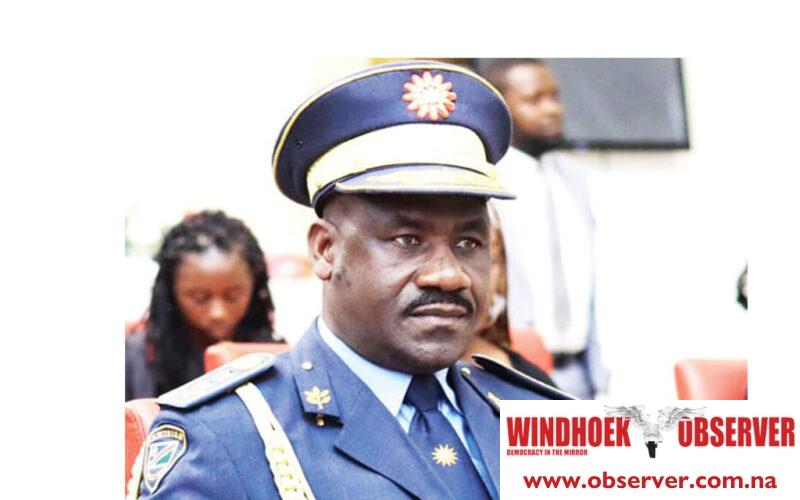
Inspector general Joseph Shikongo has ordered police officers in Katima Mulilo and across the Zambezi region to respond to community callouts on foot even when no vehicles are available.
Shikongo said the shortage of vehicles must no longer be used as a reason for failing to attend to public complaints.
“Seventy vehicles should be available to assist. The issue of telling the community that there are no cars must come to an end. I do not want to hear about it again,” Shikongo said while addressing police officers in Katima Mulilo last week.
However, he acknowledged that 27 vehicles in the region are currently grounded due to mechanical problems but said they are being repaired.
He warned that any officer who informs the public that there is no vehicle available could face disciplinary action for neglect of duty.
He also urged officers to increase visibility and called on intelligence units to step up efforts to detect and prevent crime.
The directive comes amid rising concern over crime in Katima Mulilo and surrounding areas.
Katima Mulilo resident Simasiku Jones said the town has become a hotspot, with some crimes linked to cross-border movement.
“Some cross the river, commit crimes here and return to their country. We also have locals who commit crimes and flee across the border,” he told the Windhoek Observer over the weekend.
He said increased patrols could help reduce crime.
“They must conduct more patrols, especially in residential areas where drugs and other illegal activities take place,” Jones said.
Community activist Lilungwe Mutafela described the order as a move to strengthen crime prevention and restore confidence in policing.
“Foot patrols will increase police visibility in residential areas, business centres, and known crime hotspots. The presence of officers on foot acts as a strong deterrent to criminal activities such as theft, housebreaking, robbery, vandalism, and other street-level offences. Residents will feel safer, encouraging free movement in their communities and increased reporting of suspicious activities,” he said.
Mutafela said officers on foot can gather direct information from residents and respond faster to incidents.
“They can gather real-time intelligence directly from residents, interact with neighbourhood watch groups, and build strong relationships with community leaders. This engagement fosters trust between the police and the public, which is critical for preventing and reducing crime,” he said.
He added that the directive promotes accountability within the police service.
“Strategically deployed foot patrols disrupt crime patterns, improve response times, and create a visible law enforcement presence that discourages offenders from committing thefts, street crimes, and other offences,” he said.
Shikongo’s order follows concerns raised about operational challenges at several border posts.
A report by the National Council Standing Committees on Home Affairs, Security and Constitutional and Legal Affairs, following oversight visits between 18 August and 9 September 2025, found staff shortages, limited patrol vehicles and infrastructure gaps at multiple entry points.
The committee visited Mata-Mata, Klein Manasse, Trans-Kalahari, Sarusungu, Mohembo, Katima Mulilo, Ngoma, Nkurenkuru, Oshikango and Kashamane border posts.
According to the report, Mata-Mata, Klein Manasse, Sarusungu, Mohembo, Ngoma and Nkurenkuru lack enough officials per shift. Oshikango has added staff to meet 24-hour operations but still faces shortages of border guards and immigration officers.
The committee also found that Mata-Mata, Klein Manasse, Katima Mulilo and Nkurenkuru lack official vehicles for daily operations and patrols.
“Although the Ministry of Home Affairs, Immigration, Safety and Security received funds to address the vehicle shortage for operations and border patrols, it did not prioritise dispatching vehicles to the borders or procure patrol vehicles as planned. The Ministry should reallocate the existing fleet so that each identified border post receives at least one or two vehicles for daily operations,” the committee recommended.
Water shortages affect Klein Manasse, Ngoma and Trans-Kalahari. Klein Manasse, Mohembo, Katima Mulilo and Ngoma experience frequent power outages.
The report also highlighted weak security infrastructure. Sarusungu and Nkurenkuru lack proper lighting and surveillance systems. Nkurenkuru continues to record illegal crossings due to the absence of a border fence.
Police holding cells face overcrowding. Oshikango Border Post reportedly lacks proper control over the movement of people crossing the border.


