
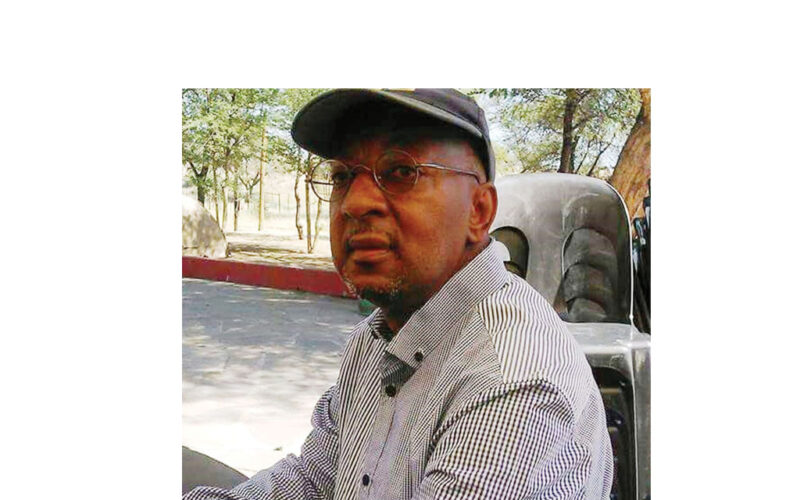
Kae Matundu-Tjiparuro
It is not its intrinsicality that has attracted Yours Truly Ideologically’s attention to the ongoing debate in the National Assembly over the Petroleum (Exploration and Production) Amendment Bill.
But the attendant hullabaloo in the august house, especially against the position and disposition of some would-be honourable members from respective sides of the house’s aisle as it would be. Positions and dispositions that, on the face of it, seemed diametrically opposed to one another. But unfortunately on close observation, they seem not so much fundamentally and ideologically. Depending on any member’s blind political loyalty instead of conscious ideology and/or political principles.
Positions and dispositions frowned upon by respective members. With one party considered as having broken the artificial ranks, as would be with the others. There and then, Yours Truly ideologically took keen interest in the debate. Especially after listening to some of the contributions. To say the least, few, if any, would be impressed with most, if any, of the contributions of the members hitherto. Wondering if this is what the august house, and by extension, the whole country, is condemned to until the next presidential and national assembly elections?
Torturous, to say the least. As much as it is early days for especially the novice and recruit members of the house. Not familiar with the house’s intricacies, eccentricities, and/or trivialities, not to mention its mediocrities. That they may sooner rather than later get over it and their initial seeming pedestrianism that they have been able to showcase this far. Yours Truly would not want to believe that from previous precedents, this is hope against hope that sooner the members will get over it and realise their true being and mission in this house. Remembering that brought them to this house in the first place, the miseries as a result of the poverty due to continued exploitation and marginalisation of the masses and the workers.
Because some of the members came forth as having little, let alone the basic understanding, of what they were and are talking about. Appearing to be talking for the sake of talking. Lest they not be seen to be just warming the benches of the august house.
But upon familiarisation, or rather scrutinising the content of the bill, its emptiness, senselessness and hollowness became apparent. Rubbing up on some unsuspecting benign and loyal members of the august house. Toeing the party discipline that has no recognition, let alone respect, for their consciousness.
“The Namibian Petroleum (Exploration and Production) Amendment Bill of 2025, tabled in late 2025 and being discussed in early 2026, aims to modernise the oil and gas sector, primarily by establishing an Upstream Petroleum Unit within the Office of the President. It strengthens state oversight, manages new offshore discoveries, and requires stricter conflict-of-interest declarations but has faced criticism regarding the centralisation of power. The bill in question is reflected on the internet.
Such cannot but give Yours Truly ideologically a full understanding of the nature of the ongoing debate on it in the National Assembly. Particularly its apparent detachment and wild nature, as if it does not have any anchor, especially an ideological one. If it did, the content and substance of the bill should have permeated the debate. Reflected first and foremost its substance, defining its proximity and, above all, how the oil in question, which is the subject matter of the Bill, is to benefit the masses and the workers of Namibia rather than a blanket beneficiation as politicians would like to sing.
Yours truly, Ideology’s disposition is that in anticipation of the manna from the yet-to-be-oiled oil, what is imperative before anything else is to see how, especially the ordinary person in the street, the sovereign and real owners of the natural resources of the country, are to benefit. Beneficiation not in the ordinary and fashionable sense that has almost become a cliché, but defining and ensuring that the oil belongs to the people and they are the ones who stand to benefit from it. Not via a trickle-down, meaning via crumbs falling from the tables of investors, but vice versa. Meaning, the owners of this resource in question, which is the oil in this instance, are not relegated to being mere beneficiaries. But they are indeed the owners of such and are not, for that matter, made to feel they own it but practically own it.
Because beneficiaries in the context that it has been hitherto used in are the environments of foreign direct investments, and those who have been okaying such investments are what the country and its people get after the investors have taken care of themselves, their corporations and their metropoles.
Yours Truly Ideologically stands to be corrected, but from his vantage point this is not what the current debate in the National Assembly is all about. This is just like putting the cart before the horse. When inviting investors, the country and her people must be clear about what any investor is bringing to the table. Because the country already has a bargaining chip, which is hers, and thus the people’s natural resources. Is she offering them on a silver platter or wholesaling such things to investors? Because in the said bill one detects nowhere where the country’s natural resources are protected in the interest of the people themselves.
Granted that at one point or the other, this cardinal matter, in one way or the other, hitherto where it has been said in passing only to appease would-be investors, shall be addressed. But waiting until then and there could be a risky undertaking. Reminiscent of how the resources of the country were, have been and continue, until this day, to be plundered. That is why it is imperative and instructive for the country from the word go to be cautious about committing her and the people’s resources to investors carte blanche. Thereby allowing the continuation of the exploitation of the country’s resources by foreign investors with little, if any, ploughing back into the country and its people. Ploughing back, for that matter, is also an understatement. Because it is not a matter of ploughing back but of tapping the country’s resources for and in the interest of the country’s people. The country’s resources must be exploited to develop the country itself and its people. Instead of forfeiting these resources to investors. Thereafter, waiting until the day investors display any benevolence. Expecting mana to fall from the havens of foreign metropoles.


