
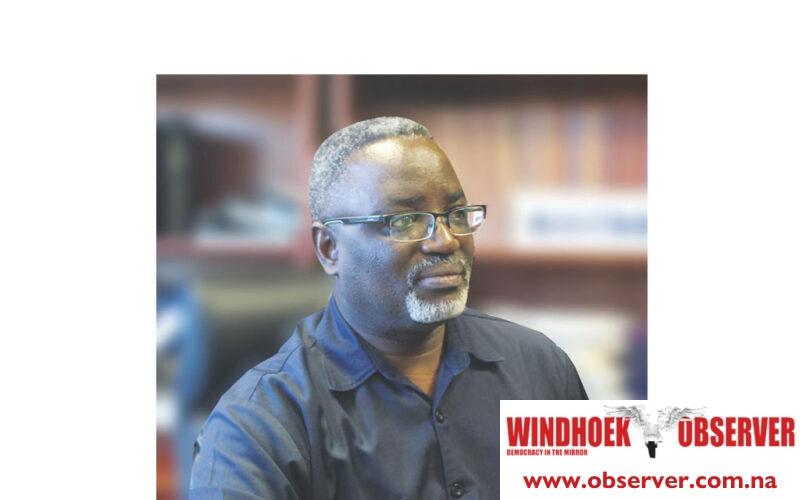
Paul T. Shipale (with inputs by Folito Nghitongovali Diawara Gaspar)
As Namibia marks its 36th Independence Anniversary on 21 March 2026, the nation rises in celebration, flags waving, anthems echoing, and memories of sacrifice honoured with pride.
It is a moment of unity. A moment of dignity. A moment of remembrance.
But beneath the celebration, a quieter, more uncomfortable question lingers. Will independence remain a symbol or become a lived reality for every citizen?
Indeed, the strength of a nation is not measured only by how far it has come but by how many of its people are able to move forward with it. What would those who died for independence say if they could see Namibia today?
Those who never lived to witness the flag rise, those who believed freedom would change everything – would they say the promise has been fulfilled?
Namibia’s founding father, H.E. Dr Sam Nujoma, used to remind the nation:
“A people united, striving to achieve a common good for all the members of the society, will always emerge victorious.”
This was not just a mere statement contained in a speech. It was a vision for the present and the future.
A future where independence would mean more than political freedom, where it would translate into shared prosperity, dignity, and opportunity for all.
Thirty-six years later, the question is no longer whether Namibia achieved victory but whether that victory is being equally lived out.
A nation that has moved forward
We fully agree with those who are saying there is much to celebrate. That cannot be denied.
Independence brought political freedom, stability, and national identity. Namibians vote. They speak freely. They participate in shaping their future.
Across the country, there are visible signs of progress:
• Roads connecting regions once isolated
• Schools and hospitals reaching more communities
• Expanding access to electricity and infrastructure
In urban centres, a growing middle class reflects a dignity once denied under colonial rule.
These are real achievements.
They matter. The sacrifices made were not in vain.
But ask a different question one hears not in official speeches but in everyday life.
Ask a young graduate in Windhoek, refreshing his email for the tenth time years after completing his studies, still waiting for a first opportunity.
Ask a mother in a rural village, where access to clean water and basic services remains uncertain.
Ask informal workers navigating survival, not prosperity.
Across towns and villages, one hears the same quiet reflection:
“We are free, as independence gave us a flag, but where are the opportunities?”
For many Namibians, independence feels less like a destination reached and more like a promise still waiting to be fulfilled.
Freedom achieved but is it enough?
Namibia is peaceful. It is stable. It is democratic. But for many citizens, freedom remains incomplete.
Because freedom is not only the right to vote; it is the ability to live with dignity, to work, to build, and to belong.
And this raises a difficult but necessary question.
If freedom exists, why does it still feel out of reach for so many?
The Unequal Reality Beneath the Surface
Look closer, and a more complex picture emerges.
Namibia remains one of the most unequal countries in the world, not just in numbers but in lived experience.
And this reality stands in tension with the vision of our Founding Father Dr Sam Nujoma, who advocated for unity, peace, reconciliation and prosperity for all.
But today, one must ask, can unity truly exist where opportunity is so unevenly shared?
• Wealth remains concentrated in the hands of a few
• Land ownership continues to reflect deep historical imbalances
• Key sectors of the economy are dominated by powerful interests
In the capital, glass towers reflect the promise of independence. Yet in many rural areas, children still walk long distances to school and for basic services such as water that freedom was meant to bring closer. Many are not safe, including in their homes.
The skyline has changed. But for many, daily life has not. The flag changed, but did the economy truly transform?
Nowhere is this tension more visible than among the youth.
Each year, thousands of young Namibians enter the job market with hope, ambition, and education. And each year, many encounter the same reality. closed doors. limited opportunities. growing frustration.
This is not just an economic issue. It is a national test.
Because the true measure of independence is not found in history books, it is found in whether the next generation can build a future within their own country.
But for many, that future is still on hold. Surely there is now subsidised education, but is the economy growing enough to create employment opportunities for our youth?
Independence has delivered progress but not equally. Indeed, our journey is long and needs a people united, striving to achieve a common good for all the members of society in order to emerge victorious.
The growing imbalance is no longer invisible and sustainable. It is discussed in homes, debated in communities, and felt in everyday life.
This year’s anniversary, celebrated across all 14 regions under the theme “Beyond 35 for a Prosperous Future”, is a moment of pride. There will be a celebration. There will be remembrance. But there must also be listening.
Because the story of Namibia is not only told in official speeches; it is also told in the voices of its people.
It is heard in the concerns of young graduates. In the resilience of rural families. In the quiet determination of those still waiting for their share of independence.
It is also reflected in moments of powerful honesty, like the voices of learners who spoke last year on the occasion of the 26th of August in the Zambezi region – not of symbols, but of substance, of justice, of shared prosperity, of real peace in everyday life.
Their message was simple but profound. Independence must be lived, not just remembered.
Toward accountability
Namibia’s journey cannot be reduced to its challenges.
From early controversies to major scandals that have tested public trust, these moments are part of the national story but not its entirety.
What defines a nation is not only its failures but also its response. We have here in mind the famous quote by Martin Luther King Jnr when he said in his book Strength of Love (1963), “In the end, we will not remember the words of our enemies but the silence of our friends.” “This famous line reflects Dr Martin Luther King Jr’s message on the danger of inaction and highlights that indifference or silence from allies is more detrimental to the cause of justice than the opposition from enemies. We therefore need;
• The courage to expose wrongdoing
• The demand for accountability
• The insistence on justice
These are also signs of a society that refuses to give up on itself.
Independence! A beginning, not an end
Independence gave Namibia its voice, its identity, and its dignity. It ended formal oppression and opened the door to self-determination.
But it was never meant to be the final destination. Freedom was achieved. Equality was not.
The challenge today is no longer to defend independence alone but also to deepen it.
• To turn political rights into real economic opportunity
• To bridge the divide between urban success and rural reality
• To ensure that growth is not only visible but shared
Independence opened the door. But a nation must now decide if it will remain limited to a few or be opened wide for all? Because true independence is measured by how many lives it transforms.
As we move beyond 35 years of independence, we are reminded of Martin Luther King Jr’s words: “A nation does not fall from external attacks, but when it forgets what it owes one another.” History shows that collapse comes not in sudden noise but through gradual moral decline when truth becomes negotiable and fear speaks louder than wisdom.”
“There was a time when disagreement did not mean hatred, when strength was measured by restraint, and when unity outweighed division. But somewhere along the way, fear replaced trust, and we began to see one another not as citizens, but as threats. In such moments, blame becomes easier than reform, and differences are turned into dangers.”
“This pattern is not new. Divided people are easier to control and distracted from the real challenges they face. If we continue on this path, we risk becoming a nation where trust fades, fear is inherited, and identity is lost.”
“True leadership does not inflame fear; it educates, unites, and builds understanding. Today, we stand at a crossroads, one path driven by fear and the other by moral courage. The future will ask whether, when unity was hardest, we chose it anyway.”
Let us set aside pride and division and remain united. As Alfredo Tjiurimo Hengari once observed in June 2012, the nation needs leaders grounded in its people and culture, not driven by tribalism or the insatiable pursuit of power. We need to advance toward equality, inclusion, and shared prosperity, one brick at a time. Let us celebrate the birth of this nation and its vast land of contrasting beauties, but moving beyond 35 should be towards a prosperous future for all, big and small, blacks and white, male and female, urban and rural, those in the formal and those in the informal economy, and not just for a few! Happy 36th Independence Anniversary Namibia!
Disclaimer: The opinions expressed here do not necessarily reflect those of our employers or this newspaper. They represent our personal views as citizens and pan-Africanists.


