
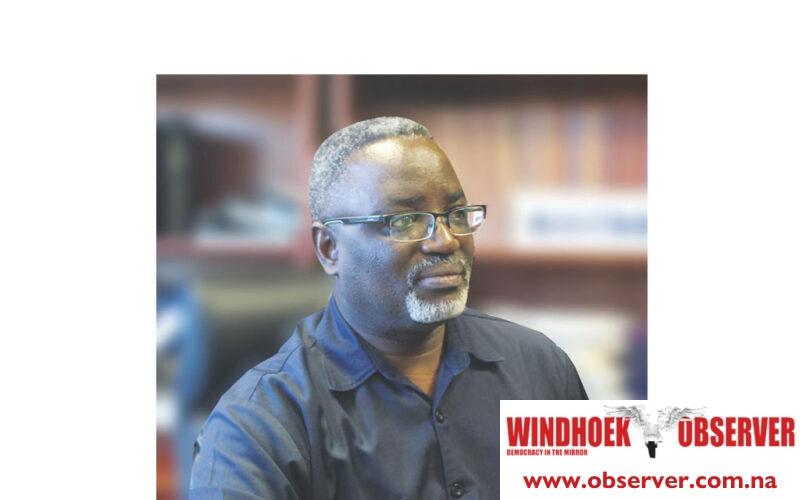
Paul T. Shipale (with inputs by Folito Nghitongovali Diawara Gaspar)
We have been taught to remember African liberation as if it happened in fragments: Namibia here, Algeria there, Egypt and Ghana somewhere in between. Clean national stories. Self-contained victories. But that is not how it was lived.
Liberation was not a series of parallel struggles. It was a connected project, argued over, coordinated, and fought across borders. What made victories like Namibia’s possible was not only courage within nations but also a continental infrastructure that supplied ideas, training, weapons, and, crucially, a shared understanding of the enemy.
That infrastructure has a name: pan-Africanism. Not as rhetoric, but as practice at its best.
Its clearest expression emerged in three moments: the All African People’s Conference in Accra (1958), then in Tunis (1960), and in Cairo (1961). To disconnect Namibia’s liberation from these moments is to strip it of its historical logic.
Accra 1958: When isolation ended
In Accra, something shifted that could not be reversed. For the first time, African leaders and liberation movements met on African soil after the Manchester Summit or Congress, not as petitioners, but as actors in a process already underway. Independence was no longer theoretical. It had begun. And with it came a realisation that the struggles unfolding across the continent were not separate. Africa Unite! Said Kwame Nkrumah, supported by George Padmore, who strongly believed that the independence of one country alone was meaningless unless it was supported by the entire continent and the people of African descent in the diaspora.
Men who had been fighting alone suddenly understood that they were part of a larger front. And more importantly, that the systems they were confronting were coordinated.
Accra was not a polite gathering. It was a confrontation of methods, of timelines, of political imagination.
Frantz Fanon, speaking for the Algerian FLN, cut through the cautious optimism that still lingered. Colonialism, he argued, was not a moral error to be corrected; it was a violent system to be overthrown. It would not negotiate its own end.
That intervention did more than provoke debate. It redefined the terms of struggle. Armed resistance was no longer an outlier; it was legitimised.
What emerged from Accra was not a detailed plan but something more important: a continental consensus hardening around the inevitability of confrontation.
For liberation movements like Swapo, still in their formative stages, this mattered. It meant that when the time came to choose a path, they would not be stepping into isolation. The ground had already been prepared.
Tunis 1960: From solidarity to coordination
By Tunis, the tone had changed. What had been argued in Accra was now being tested in reality.
The Algerian war was no longer symbolic; it was instructional. It showed that colonial power could be fought, stretched, and made vulnerable. And it forced a new question onto the table; if one struggle could be supported, why not all?
The idea of an African revolution as a shared battlefield began to take shape. Calls for all-African brigades to support Algeria were not fully realised, but they revealed a deeper shift. Liberation was no longer imagined as a sequence of national uprisings. It was becoming a coordinated effort.
At the same time, a new anxiety surfaced. Independence, where it had been achieved, was already showing signs of limitation. External pressure had not disappeared; it had adapted. Economic dependence, military influence, and political interference were emerging as new instruments of control. Africa became divided into two groups called the Casablanca and the Monrovia groups.
Yet Pan-Africanism responded by becoming more practical.
It linked movements to states. It connected fighters to training grounds. It turned solidarity into supply lines.
Algeria, still fighting its own war, began to function as a hub, offering not just inspiration but material support like the two TT pistols and two submachine guns to Swapo. Egypt, under Nasser, became a centre of training and strategic alignment. Our first group of combatants were trained on the mountain of Sinai under the support and supervision of people like Mohamed Fayek.
It is within this network that President Nujoma’s actions must be understood.
When he secured weapons from the FLN, it was not a gesture of goodwill. When Namibian guerrilla fighters trained in Egypt, it was not an isolated opportunity. These were the outcomes of a system that had begun to redistribute resources across borders.
Thus, Pan-Africanism was not a slogan. It was the supply chain of liberation.
Cairo 1961: Naming the real enemy
Cairo was different. The assassination of Patrice Lumumba hung over the conference like a verdict. Whatever illusions remained about the nature of global power were gone. Independence did not guarantee sovereignty. It could be reversed, undermined, or hollowed out.
The mood hardened. The analysis deepened.
It was here that ‘neocolonialism’ was named with precision, not as an abstract fear, but as a system already in operation. Power, the delegates argued, no longer required formal occupation. It could operate indirectly through economies, through political systems, through military arrangements, and through culture itself.
What they described was not temporary. It was structural.
They identified the mechanisms:
• Governments shaped or sustained through external influence
• Economies locked into dependency through unequal agreements
• Military presence disguised as cooperation
• Fragmentation encouraged to prevent collective strength
• Narratives controlled to shape how Africans understood their own reality
The Congo became the warning. Lumumba’s removal was not just an anomaly; it was a demonstration.
For liberation movements like SWAPO, this changed the meaning of liberation. The objective was no longer simply to end colonial rule. It was to secure a form of genuine independence that could withstand a system designed to reassert itself in new forms. The struggle had expanded.
President Nujoma inside the system
When President Sam Nujoma, as the leader of Swapo, moved through Accra, Tunis, and Cairo, he was not yet a symbol. He was a man facing an asymmetry: how to confront a powerful regime without a state, without an army or military force, and without guarantees. It is here that his conviction and pragmatism were forged in the crucible of the struggle while others were bogged down in ideologies and seeking theories through long studies. He was now not only inculcated with the history of his forefathers and their road alone but was also walking on the shoulders of African giants.
What these conferences offered was not certainty alone but also possibility.
They gave him:
• Recognition and placing SWAPO within a legitimate continental struggle
• Access, linking him to governments and movements willing to assist
• Directing and situating Namibia’s fight within a broader strategic framework of Pan-Africanism.
Thus, the shift toward armed struggle was not an isolated decision. It reflected a consensus forged across the continent. The training of guerrilla fighters abroad was not improvisation; it was coordination. The acquisition of weapons was not luck; it was structure.
Namibia’s liberation did not emerge from within its borders alone. It was also assembled across them.
The fracture
And then, just as clarity peaked, the system began to break.
Cairo did not only name the enemy; it exposed internal contradictions. Some states, newly independent, were already entangled in the very networks of dependence being criticised. Others pushed for deeper transformation: economic, political and ideological.
A fracture opened. On one side, those willing to confront the global system in its entirety.
On the other hand, those prepared to accommodate it.
This was not a minor disagreement. It was decisive.
The planned continuation of the AAPC collapsed. In its place emerged the Organisation of African Unity (OAU) in 1963, an institution with some who privileged sovereignty over transformation and stability over confrontation.
The shift mattered. What was lost was not just momentum. It was coherence.
The networks that had connected liberation movements weakened. Coordination gave way to fragmentation. Liberation struggles continued with Nyerere and the OAU’s Liberation Committee with General Hashim Mbita but increasingly within constrained, often isolated conditions shaped as much by Cold War alignments as by continental strategy.
What collapsed after Cairo was not just a conference series on pan-Africanism. It was the possibility of Africa acting as a single political force.
Namibia in a diminished landscape
Namibia’s long road to independence achieved only in 1990 unfolded within this altered reality.
The militant orientation shaped in Accra, Tunis and Cairo remained. But the infrastructure that had once supported coordinated struggle had thinned.
Swapo had to navigate:
• External alliances filtered through Cold War interests
• Reduced continental cohesion
• A global system already adapting to preserve influence
Its reliance on foreign training, its diplomatic strategies, and the duration of its struggle all reflect this shift.
Namibia’s liberation was both enabled and constrained by these dynamics, including Pan-Africanism, born from its strength and prolonged by its fragmentation.
The unfinished question
The analysis produced in Cairo did not fail. If anything, it proved enduring. The patterns identified, such as economic dependency, political manipulation and external intervention, remain embedded in the global order.
What failed was consolidation. Early pan-Africanism, at its most effective, functioned as a system capable of aligning vision with material support. But it did not survive its own contradictions.
And so the history that remains is incomplete. We must thus not only remember victories but also the networks that made them possible. We must celebrate not just leaders and forget the structures that sustained them.
Recovering this history is not nostalgia. It is clarity.
Because the central insight of that moment still stands. Africa’s struggles were never truly only national. They were continental and remain systemic.
The question now is not whether that system is understood. We hope it is.
The question is whether there is the will to act with the same level of coordination that once existed and was just as quickly abandoned.
Everything remains on the chessboard. Until the next move, as pan-Africanists, we return to fundamentals, restoring the level of coordination that once defined us.
Not yet, Uhuru, not yet checkmate, but a deliberate consolidation of position in preparation for what comes next. The total emancipation of the people of Africa, those at home and those abroad. Ghana showed the way back in 1957 and the Black Star, as named after Marcus Garvey’s ship, is showing us the way again with the recent UN resolution to consider the Trans Atlantic slave trade as the gravest crime against humanity and for restorative justice. The veil has been removed; now we can see clearly.
*Disclaimer: The opinions expressed here do not necessarily reflect those of our employers or this newspaper. They represent our personal views as citizens and pan-Africanists.


