
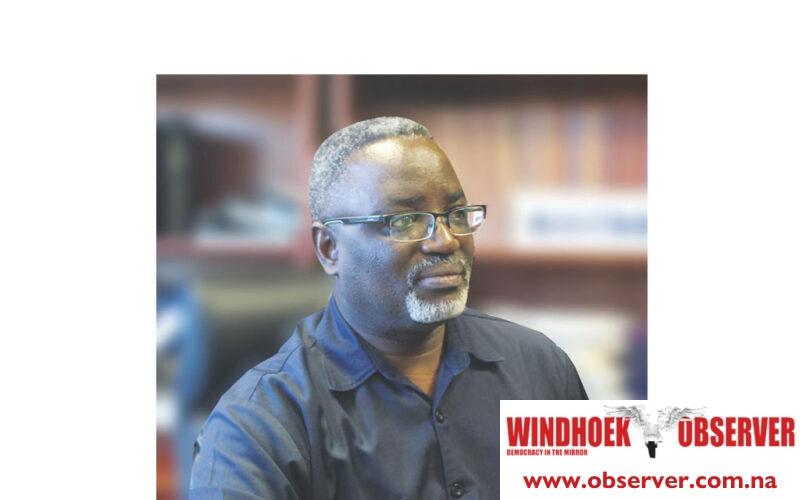
Paul T. Shipale (with inputs by Folito Nghitongovali Diawara Gaspar)
At independence, a flag rises, an anthem is sung, and a nation declares itself free. But decades later, the more difficult question emerges quietly: persistently free in what sense and for whom?
In Namibia today, that question does not begin with policy. It begins with legacy.
A system cannot fully erase a national legacy forged through resistance. But it can reshape it, dilute it, and, more subtly, domesticate it. What was once a force of transformation can be reduced to ceremony, honoured in speech and disconnected in practice. The real question is not whether Namibia remembers its past but whether that past still structures its present.
Namibia’s legacy is not singular. It is layered, built through successive traditions of resistance embodied by figures such as Hendrik Witbooi, Kahimemua Nguvauva, Samuel Maharero, Nehale lya Mpingana, Mandume ya Ndemufayo, Iipumbu ya Tshilongo and Hosea Kutako. These were not simply historical actors; they were architects of a political consciousness grounded in dignity, autonomy, and refusal. Their struggles did not end with them as they seeded a continuity that would later find expression in President Sam Nujoma and the liberation movement he led.
That continuity was not accidental. It was sustained by a shared ethos often described as Ubuntu, where the struggle for freedom was inseparable from a collective sense of justice and humanity. But ethos alone does not guarantee outcome. What is inherited must be enacted, and what is enacted can either be transformed or distorted.
Legacy, then, is not memory. It is pressure.
Liberation as a regional construction
Namibia’s independence was not inevitable. It was constructed deliberately, collectively, and at great cost.
Angola, Zambia, Tanzania, and other Frontline States did not merely support Namibia’s struggle; they constituted the infrastructure that made it possible. Military bases, diplomatic corridors, political shielding – this was not symbolic solidarity. It was strategy.
Liberation, in this sense, was never purely national. It was regional and continental in design.
And yet, this raises a question that is difficult to ignore:
Why did Southern Africa achieve such coordination under conditions of war but struggle to replicate it under conditions of peace?
The uncomfortable implication is that the political will that sustained collective liberation has not been translated into collective development. What once functioned as a system of shared sacrifice has fractured into parallel national trajectories often competing, rarely integrated.
The will to found and its limits
President Sam Nujoma’s historical significance lies not in symbolism, but in execution.
Namibia’s independence emerged within a hostile global environment shaped by Cold War rivalries, regional destabilisation, and entrenched asymmetries of power. Many liberation movements fractured under similar conditions: internally divided, externally manipulated, or structurally overwhelmed. Swapo under Nujoma did not.
Under President Nujoma’s leadership, Swapo maintained coherence and achieved what remains rare in post-colonial Africa: the transition from liberation movement to governing authority without immediate collapse. His political vision was anchored in three non-negotiables:
• sovereignty as an absolute objective
• territorial integrity as a strategic necessity
• statehood as the endpoint of liberation
These were not rhetorical commitments. They were pursued with persistence under pressure.
But this is where legacy becomes more complex. The capacity to win liberation is not the same as the capacity to transform what is inherited. Founding a state is one phase. Restructuring its underlying economic logic is another.
And it is here that the limits of first-generation liberation politics begin to surface.
Pan-Africanism as infrastructure and its erosion
President Nujoma’s Pan-Africanism was not ideological performance. It was operational.
Namibia’s liberation depended on a functioning regional system:
• Angola as a military and logistical base
• Zambia and Tanzania as diplomatic and transit corridors
• the Frontline States as a geopolitical shield
This was pan-Africanism not as aspiration but as infrastructure.
At the same time, President Nujoma navigated global contradictions with pragmatic clarity, balancing former Eastern alliances with broader multilateral engagement, as he knew that pan-Africanism doesn’t look left nor right but forward. This flexibility ensured that Namibia’s struggle remained both viable and visible.
The contrast with the present is stark.
Today, Pan-Africanism often survives as a language rather than a system. Regional coordination, once forged under existential pressure, has weakened in the absence of it. Economic integration remains partial, fragmented, and frequently subordinated to external dependencies.
If pan-Africanism does not evolve into material cooperation, industrial, financial, and infrastructural development; it risks becoming decorative.
Ubuntu in statecraft and its tension
Post-independence Namibia avoided large-scale retributive violence. Stability was preserved through reconciliation and institutional continuity. This reflects Ubuntu as a governing instinct. A divided society cannot exercise sovereignty effectively.
But the situation must be assessed without sentimentality.
Ubuntu, as practised in reconciliation, stabilised the state. It did not fundamentally restructure it.
Land distribution, ownership patterns, and economic power remained uneven. This reveals a deeper tension as ethics, Ubuntu stabilises; as a political economy, it must redistribute.
Without the latter, it risks becoming moral language coexisting with material inequality.
The question is not whether reconciliation was necessary; it was. The question is whether it became sufficient and redistributive when it was only ever meant to be foundational.
The central contradiction
President Nujoma’s legacy reflects a broader continental condition:
Liberation movements took over the state but did not fully transform the economic structures inherited from colonialism.
This is not simply a matter of leadership failure. It is structural. The skills required to wage liberation struggle, mobilisation, and resistance are not the same as those required to redesign economies embedded in global dependency.
But acknowledging this constraint does not resolve it. It sharpens it.
Namibia today embodies this duality:
• a stable state with a coherent national identity
• persistent inequality rooted in historical dispossession
• partial transformation of ownership and production
This is not an anomaly. It is the post-liberation condition.
And it carries consequences. When economic sovereignty lags behind political sovereignty, independence risks becoming formal rather than substantive; that is, it is recognised in law but uneven in lived reality.
From legacy to obligation
To treat Founding Father Nujoma as a completed chapter is to misunderstand him.
Legacy is not tribute. It is transmission, the transfer of unresolved questions, institutional trajectories, and political burdens.
His significance lies not only in what was achieved but in what remains unfinished:
• Can political independence retain meaning without economic control?
• Can regional solidarity be rebuilt into functional integration?
• Can reconciliation evolve into redistribution?
These are not abstract questions. They define the trajectory of the present.
And they are not neutral. Different actors will answer them differently, some by extending the logic of liberation, others by containing it. Legacy, in this sense, is not inherited passively. It is actively contested.
Continuation under altered conditions
Preserving President Nujoma’s legacy is not an act of remembrance. It is an act of continuation under fundamentally different conditions.
From political to economic sovereignty, control over territory must translate into control over value. Resource governance, industrial policy, and capital formation cannot remain peripheral concerns. Without them, sovereignty remains incomplete.
From liberation networks to economic systems
The logic that sustained Frontline States must be repurposed for development through infrastructure, trade integration, and financial coordination. Without this, regionalism remains tokenism and rhetorical.
From stability to transformation
Reconciliation must give way to structural change. Land, capital, and opportunity cannot remain concentrated without undermining the very foundations of liberation.
Against Simplification
The greatest risk is not that Founding Father Sam Nujoma will be forgotten. It is that he will be simplified. Turned into symbolism alone.
Simplification turns historical figures into monuments that are safe, ceremonial, and politically convenient. But monuments do not govern. They do not redistribute. They do not integrate.
To reduce founding father Nujoma to a symbol is, in effect, to neutralise him.
He did not leave behind a finished model. He left a compass for direction anchored in sovereignty, sustained by regional and continental solidarity, and moderated by coexistence.
The harder truth is unavoidable, and his victories are inherited. But so are his constraints. And so are his unfinished tasks.
If liberation is treated as a closed chapter, its leaders become artefacts of history.
If legacy is understood as continuation, then the question is no longer what President Nujoma achieved but what is being done now with what he made possible. We are not even talking about completing his railway project, including to Katima and Opuwo. We are even disputing his Cape Fria project and not signing feasibility studies. We forget that this is social engineering and redesign and envisioning the future. Why would the people in the northern regions from the Kunene River through the Kavango River to the Zambezi River only trade on the south of the red line? Why not Angola, Zambia, Botswana, Malawi, DRC, Tanzania, all the way to Ethiopia, Egypt and the rest of the continent?
And that question does not sit in the past.
It sits, uncomfortably, in the present. Founding Father Nujoma is a continuation and not a closed chapter. He is simply not just a symbol but an unfinished legacy and a compass for direction anchored in sovereignty and self-sufficiency. Let this legacy not be diluted by petty parochial and tribal politics.
As founding father Nujoma used to say, ‘Those who stand in our way to freedom and independence, whether within or without, sometimes disguised as one of our own, we will smash them to pieces, as we can no longer ignore the urgency of the second struggle for economic emancipation and liberating our minds from ignorance, poverty, hunger and diseases!’ Indeed, Sam Oulipeni, yelula epandela la Namibia. Let that eternal flame keep burning, and let that banner be lifted high!
Disclaimer: The opinions expressed here do not necessarily reflect those of our employers or this newspaper. They represent our personal views as citizens and pan-Africanists.

