
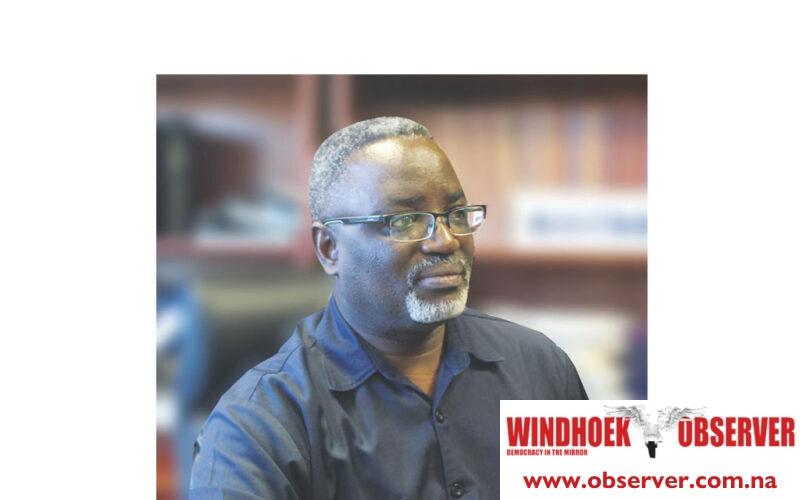
PAUL T. SHIPALE (with inputs by Folito Nghitongovali Diawara Gaspar)
Namibia enters the close of 2025 with a sobering national truth: the age of endless planning has run its course. Citizens across the country, from Epukiro to Lüderitz, from Katutura to Arandis, have grown impatient with strategies that promise more than they deliver. For many, the question is no longer what the government intends to do, but when Namibians will finally feel the results.
Against this backdrop, the two-day first cabinet retreat of the eighth Administration, which was held at NIPAM under the theme “Enhancing Policy Coordination, Governance and Service Delivery for Accelerated National Development” and which was anchored on seven priority areas, became something unusual, not a bureaucratic routine, but a national barometer. It offered a glimpse into a government that seems to recognise the weight of the moment and the narrowing window in which to prove its relevance.
A retreat of reflection and reckoning
Both President Netumbo Nandi-Ndaitwah and Prime Minister Elijah Ngurare’s December statements captured a rare tone: sober, introspective, and uncomfortably honest. Rather than reciting achievements or deflecting criticism, they invited the country into a moment of collective reflection on policy coordination. The message was clear: Namibia cannot advance without examining the ethical, institutional, and historical burdens that continue to slow it down.
Three thematical issues stood out: unity, integrity, and evidence-based leadership crystallised in a new governing mantra: “A united, coordinated approach will always yield better outcomes.”
It is a deceptively simple phrase, but it speaks directly to Namibia’s chronic governance dysfunction: fragmentation. For decades, ministries have operated in silos, not systems. Whether this administration can break that cycle remains an open and politically loaded question.
A leaner cabinet: Efficiency or experiment?
The decision to reduce the cabinet to 14 ministers is arguably one of the boldest structural reforms of recent years. The logic is appealing: fewer actors, clearer mandates, tighter oversight. Monthly performance reviews at State House appear designed to inject discipline into a system often lacking it. But alas! Some of us have felt the brand of that bureaucracy for half a year, and we did not utter a simple word. That’s why when prime minister Dr Ngurare said, if I may paraphrase him, “We should not be the source of tears our people shed every day…but be the reason people wake up happy as they go daily about their working life,” that message hit hard at home, as it comes from someone who has experienced the same bureaucracy and yet remained ‘Ndjikiti’, as he likes to say. Indeed, those who don’t have passion for the people are at the wrong place as public servants, as it is not a place for parochial self-serving ambitions.
But structure alone does not guarantee transformation. Namibians are now asking:
• Will fewer ministers actually mean fewer excuses?
• Will coordination become a habit, or simply another promise?
• And will data-driven reviews lead to consequences, or merely colourful presentations?
A smaller Cabinet raises expectations, but it also magnifies accountability. It seems the issue is not even the number of ministers but the bureaucracy in the ministries, where we have two executive directors, one acting as an accounting officer pulling the budget to their side while the other one, usually a DED, is pulling the budget to the other side to benefit from lucrative tenders of the government through the middlemen/women to procure arms, toilet paper, bulbs, printing and photocopying machines, state funerals and catering of national events, building stadiums, procuring medicine and pharmaceutical products and equipment, allocating fish quotas and resettlement farms – the list is endless! So which coordination are we supposed to enhance here? Besides, now politicians are divided into camps of their own, given next year’s extraordinary congress of the ruling party.
Dashboards, data and the danger of cosmetic reform
The move toward real-time performance dashboards places Namibia in step with global trends in modern governance. Public monitoring, monthly updates, and quarterly reviews could, in theory, shift the state from slow reaction to active problem-solving.
But technology has limits. A dashboard cannot enforce discipline; it can only reveal its absence. Without consistent consequences, even the most sophisticated system will become a high-tech echo of old frustrations.
The public consensus is firm: accountability must be visible, predictable, and unaffected by rank. Indeed, nowadays the buzzwords are ‘accountability’ and ‘effective and efficient service delivery’.
That’s why I couldn’t agree more with a phrase usually quoted by Asser Ntinda that talks about the proverbial Sword of Damocles, or what the French call l’épée de Damoclès, which refers to an imminent, ever-present peril or disaster threatening someone in a position of power or seeming good fortune, symbolising that great power or luxury comes with constant anxiety and danger, a lesson taught by the ancient Greek story popularised by Cicero where a sword hung by a single horsehair over a flatterer’s head.
Ethical governance: The nation’s non-negotiable demand
Years of corruption cases and bureaucratic opacity have eroded public trust. The administration’s renewed emphasis on ethics through audits, procurement reforms, and whistleblower protections signals recognition of the crisis.
But integrity cannot survive on policy alone. It demands political courage, especially when accountability becomes uncomfortable. Namibians know the difference between symbolic action and substantive change.
Ethical governance, simply put, must be lived, not staged.
Service delivery: The ground-level test
This administration’s priorities are well-known and widely supported:
• reducing youth unemployment,
• improving healthcare and education,
• expanding housing and serviced land,
• easing barriers for SMEs,
• stabilising essential public services.
These are not abstract goals. They shape daily life. Until rural clinics have staff, students have reliable infrastructure and financial support, SMEs face fewer hurdles, and young people secure meaningful work, public optimism will remain cautious. Policy ambition means little unless it reaches ordinary people.
The politics beneath the surface
While the retreat emphasised unity and performance, Namibia’s political context still matters. Internal alignments, shifting alliances, and emerging ambitions quietly influence the reform landscape. Yet the public judgement will not hinge on political manoeuvring.
Namibians will evaluate the Eighth Administration through outcomes:
Do children learn better?
Do services function more reliably?
Do youth find work?
Does corruption decline in ways that can be seen and felt? Are the bottlenecks of what the PM called ‘Mr and Mrs Procurement’ routed out of the system, including at the very top of the administration’s apparatus? Indeed, the Prime Minister has urged the removal of impediments to service delivery, including lengthy procurement processes and other bottlenecks across offices, agencies and ministries.
Delivery, not factional arithmetic, will define political legitimacy.
Unity as culture — Not slogan
President Netumbo Nandi-Ndaitwah said ethical leadership is non-negotiable and insisted that leaders must demonstrate integrity, transparency, and moral clarity. She reminded all those who were present at NIPAM and the general populace that public resources must be managed with care and that every decision should reflect fairness and accountability.
In addition, she urged robust discussions on issues central to strengthening governance and improving service delivery. “Good policies without implementation are just as good as nothing, as they do not change people’s lives. It is therefore my considered opinion that from this retreat we will be more sharpened to move with urgency, beyond planning into action, delivering practical results that citizens can feel and see. It is my hope that from our discussions in the two days at our disposal, we will appreciate the importance of inter-ministerial collaboration and embrace joint planning where responsibilities overlap.
“The President’s call for a coordinated national approach resonates because it touches the country’s structural weakness. But unity must be practised, not proclaimed. Citizens expect to see collaboration among ministries, alignment across levels of government, and a coherent national purpose that transcends rhetoric.
If unity becomes operational reality, Namibia may finally unlock the efficiencies long promised in government reports. If not, the phrase will become another hollow slogan remembered only for its unfulfilled potential.
The real test begins now
The Eighth Administration has laid out a credible framework: discipline, unity, evidence, delivery, and ethical leadership.
But Namibia has heard compelling visions before. Good beginnings do not guarantee good endings.
The administration’s legacy will rest on whether intention becomes impact:
• Jobs must materialise.
• Basic services must improve across regions.
• Housing and land delivery must speed up.
• Corruption must be confronted without selective hesitation.
• A culture of performance must replace bureaucratic survivalism.
“Our takeaways from this gathering will definitely ignite our mindset as we proceed to the 2026 Cabinet for continuous improved service delivery to the Namibian people. The success of the 8th Administration depends on our ability to work together, to act decisively, and to deliver on the promises we, as the leaders, have made to the Namibian people through the SWAPO Party Election Manifesto and its Implementation Plan, which has been translated into NDP6.” The President said.
If these aspirations turn into action, Namibia could enter a new era of democratic confidence, a governance renaissance built not on slogans but on results. If not, the retreat will join the long archive of missed moments.
For now, the nation remains watchful, hopeful enough to believe, alert enough to question, and determined enough to demand more.
Disclaimer: The opinions expressed here do not necessarily reflect those of our employers or this newspaper but are solely our personal views as citizens and Pan-Africanists.


