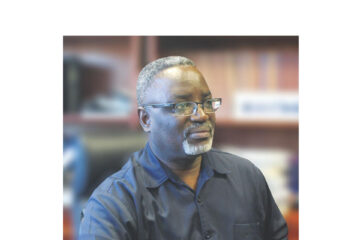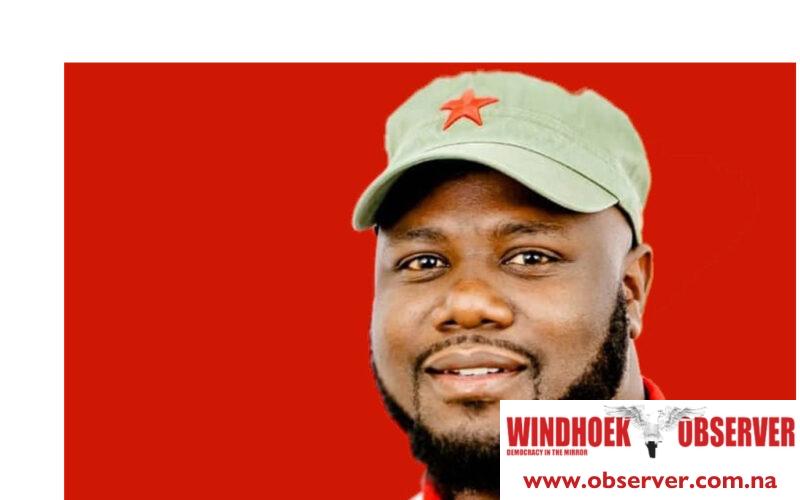
George Kambala
There are moments in a nation’s life when time seems to stand still when the noise of politics fades, when the urgency of daily life pauses, and when we are called, collectively, to reflect. The passing of Hon. James Unomasa Uerikua is one such moment.
It is difficult to speak of loss when the life we are remembering was so full, full of purpose, of conviction, of quiet but unwavering strength. And yet, perhaps the true measure of a life is not in how loudly it was lived, but in how deeply it was felt by those it touched. By that measure, Hon. Uerikua lived a life of profound consequence.
The tributes shared at his memorial service on Wednesday night confirmed what many of us already knew, but perhaps had never paused long enough to fully articulate. Hon. Uerikua was, indeed, a statesman. A man among men. Speaker after speaker rose not to repeat rehearsed praise but to testify to a life that had left real footprints in real lives. The consistency of those testimonies, drawn from different walks of life and political persuasions, revealed a rare truth: this was a leader whose influence transcended titles, offices, and party lines.
He was not a man of spectacle. He did not seek the spotlight. But in every room he entered, in every conversation he held, and in every decision he made, there was a presence, a calm, grounded authority that commanded respect without ever demanding it. He was, in the truest sense, a servant of the people.
What set Hon. Uerikua apart was not only his leadership but also his humanity.
He understood something that many in public life often forget: that leadership is not about positions nor political victories. It is about people. It is about listening. It is about showing up not only when it is convenient, but especially when it is not.
One could never have a short conversation with Hon. Uerikua. Every discussion, no matter how casual it began, inevitably returned to substance. Agriculture. Food security. Youth. Land. Opportunity. The future. He believed deeply that the soil of this country holds both our economic freedom and our social dignity. For him, agriculture was not merely a sector; it was the lifeline of the nation and a bridge for young people into productivity, ownership, and self-worth.
Many of us will remember how conversations with him often found their way there ending with reflections on agriculture, on productivity, and on how young Namibians could be better positioned to take up their rightful place in building the economy. It was not incidental; it was intentional. It was his way of constantly anchoring discussions in the future he envisioned for this country.
He built bridges where others built walls. He reached across party lines, across regions and across identities not because it was politically expedient but because he believed, deeply and unapologetically, in a Namibia that belongs to all who call it home.
At a time when division can so easily find its way into our national discourse, Hon. Uerikua stood as a quiet but firm rejection of tribalism, exclusion, and narrow identity politics. He did not see tribes; he saw Namibians. He did not see political colours; he saw people.
And perhaps that is one of the greatest lessons he leaves behind.
In a world that often pressures us to conform, to perform, to fit into expectations that are not our own, Hon. Uerikua remained unapologetically himself. He carried his upbringing with pride. He never diluted who he was to be accepted, nor did he ever impose who he was on others. He walked in authenticity and, in doing so, gave others permission to do the same.
There is courage in that. The courage to be true to oneself. The courage to admit when one is wrong. The courage to listen, to learn, and to grow.
And perhaps most importantly, the courage to compromise not out of weakness but out of a deep understanding that the bigger picture, always, must be Namibia.
Hon. Uerikua understood that leadership is not about winning every argument. It is about building consensus. It is about knowing when to stand firm and when to find common ground for the sake of progress.
His commitment to justice was equally unwavering. One of the causes that lived within him, not as a political talking point but as a moral obligation, was the question of genocide. He believed that this chapter of our history must be resolved with truth, dignity, and meaningful restoration – one that heals communities and strengthens the nation as a whole.
But beyond the statesman, beyond the leader, there was also a man of warmth, a man with a sense of humour, a man who could bring laughter into the often tense corridors of Parliament, a man who remained accessible, approachable, and deeply human.
Now, that voice is silent.
The passing of Hon. Uerikua, alongside his beloved son, is a loss that words can scarcely capture. It is a painful and unrelenting reminder of the fragility of life.
And in that reminder, there is also a call. A call to live with intention. A call to lead with integrity. A call to serve with urgency.
Hon. Uerikua has laid down his spear. But the work remains.
In honouring his life, we must do more than remember him—we must become better because of him. We must be authentic. We must be humble enough to admit when we are wrong. We must be courageous enough to compromise for the greater good. And above all, we must never lose sight of the bigger picture: Namibia.
To Namibia: May his legacy guide us. May his example inspire us. And may his spirit live on in the Namibia we continue to build.
To his family, loved ones, comrades, and all those who walked this journey with him, I extend my deepest and most heartfelt condolences. May you find strength in the legacy he leaves behind, comfort in the lives he touched, and peace in knowing that his service to Namibia will never be forgotten. In this time of profound grief, the nation mourns with you.
Rest well, Hon. James Unomasa Uerikua. Your life mattered. Your work endures. Your legacy lives on.
*George Kambala is an Affirmative Repositioning (AR) movement member of parliament.