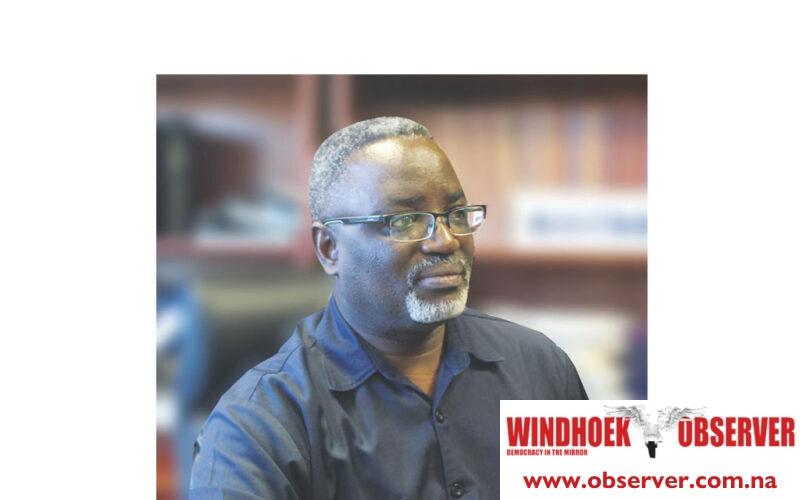
Paul T. Shipale (with inputs by Folito Nghitongovali Diawara Gaspar)
Namibia has just paid off the largest external debt obligation in its history. Yet today, it spends more than twice as much on interest payments as it does on development.
That is not a crisis. It is a crossroads. When Finance Minister Ericah Shafudah tabled the N$104 billion 2026/27 national budget, she did not promise miracles. She promised stability. The deficit narrows from 6.6% to 5.5% of GDP. Public debt, projected at 65.2% of GDP, is expected to stabilise and gradually decline. There are no reckless giveaways, no fiscal fireworks, and no applause lines crafted for short-term political gratification. On paper, this is a responsible budget. But responsibility, while necessary, is not the same as ambition.
Namibia is not standing at the edge of fiscal collapse. It is standing in the middle of structural stagnation. And stagnation cannot be negotiated away through discipline alone. It requires redesign.
The eurobond moment: credibility was earned.
Any intellectually honest assessment must begin with the defining fiscal milestone of the past year, the full and timely repayment of the US$750 million eurobond in October 2025.
That repayment was more than procedural compliance. It was a declaration of seriousness. At a time when several African sovereigns were navigating distress, Namibia chose discipline over deferral. The eighth administration, by combining a sinking fund with calibrated domestic borrowing, avoided exposure to volatile international markets and reduced exchange rate vulnerability.
The debt profile now leans heavily domestic, roughly 85%. Refinancing risk has been moderated. Market credibility has been reinforced. The ship was anchored securely. But anchoring is not navigation. Stability prevents drift. It does not create motion. This budget secures stability and fiscal discipline but does not yet engineer transformation and economic growth.
The cost of prudence
The eurobond settlement strengthened the balance sheet, but it narrowed fiscal flexibility. Financing a liquidity event of roughly N$14 billion inevitably reshapes the budget’s architecture.
The numbers reveal the trade-off:
• N$81.3 billion allocated to operational expenditure
• N$6.5 billion directed to development spending
• N$16.2 billion consumed by interest payments
Namibia now spends more servicing yesterday’s obligations than building tomorrow’s capacity.
Every dollar directed to creditors is a dollar not invested in water infrastructure, rail modernisation, industrial parks, digital networks or logistics corridors. Debt sustainability is often framed as a ratio. It is more accurately a question of opportunity cost. Liquidity risk has been managed. Productivity risk remains.
A state that maintains more than it builds
The structure of expenditure is more telling than the total envelope. Operational spending sustains salaries, administration and the machinery of government. Development spending constructs productive capacity. When the overwhelming share of the budget maintains existing systems rather than expanding economic frontiers, caution becomes architecture.
Indeed, we concur with those who are saying Namibia cannot consume its way into prosperity. It must invest its way there. The country continues to confront youth unemployment, inequality and sectoral concentration in extractive industries. Mining revenues strengthen fiscal buffers, but they do not absorb labour at scale. Growth projected at 3.1% may be respectable globally. Domestically, it is insufficient.
Meaningful employment absorption likely requires sustained growth closer to 4 – 5 per cent. Anything below that risks equilibrium without inclusion.
Revenue-generating growth is not automatically employment-generating growth.
The South African comparison: A regional mirror
A comparative glance toward South Africa sharpens the perspective. Under Finance Minister Enoch Godongwana, South Africa’s budget has similarly prioritised debt stabilisation and wage containment. Debt service costs are among the fastest-growing expenditure items, exerting pressure on developmental flexibility.
The structural challenges are familiar:
• Large wage bills
• High unemployment
• Debt servicing crowding out capital investment
Yet South Africa’s fiscal consolidation is explicitly paired with reform initiatives in energy, logistics and state-owned enterprises. The outcomes are uneven, and politics remains contentious. But the reform narrative is institutionally articulated. Namibia’s consolidation, by contrast, appears more self-contained. Stability is pursued vigorously. Structural reform is implied rather than institutionalised. South Africa reforms under pressure. Namibia has the opportunity to reform from stability. That distinction matters.
Arithmetic is neither reform nor transformation.
The deeper structural questions remain:
• Can the public sector wage bill grow below nominal GDP?
• Can underperforming state-owned enterprises be rationalised?
• Can procurement systems be modernised to prevent leakage?
• Can performance benchmarks be introduced across ministries?
Fiscal discipline maintains order. Structural reform creates momentum. Without reform, consolidation risks becoming a permanent holding pattern.
The political economy of caution
Budgets are economic documents, but they are also political instruments. Operational stability is politically safer than structural disruption. Public employment is not merely a line item; it is a constituency. Choosing caution may be understandable. But Namibia is not navigating collapse. It is navigating complacency. Stagnation does not shout. It settles.
What courage would look like
Transformation does not require recklessness. It requires prioritisation. A forward-looking framework could gradually increase development spending toward a meaningful share of total expenditure. It could link industrial incentives directly to measurable job creation thresholds. It could publish transparent performance scorecards for state-owned enterprises. It could embed outcome-based budgeting across ministries.
Mining windfalls should not simply reinforce fiscal buffers; they should seed downstream value chains, manufacturing expansion and SME integration. Namibia now possesses something rare: fiscal credibility without crisis. The question is whether that credibility becomes a launchpad or a comfort zone.
Stability as a platform or ceiling
To the minister’s credit, this budget avoids populism. It preserves macroeconomic integrity in an uncertain global environment. That achievement should not be trivialised. But credibility alone does not diversify an economy. Consolidation alone does not create employment. Debt repayment alone does not transform structure. Namibia has anchored the ship. The waters are calmer. The hull is reinforced.
History will not judge this budget solely by its deficit path or its debt ratio. It will judge whether stability became a platform for structural reform or a ceiling that limited ambition. As Can Themba said in his short story ‘The Suit’ (1963), ‘If you don’t get to the truth and face it head on, the lie will kill and destroy everything in the end.’ Indeed, the arithmetic is sound. The question that remains is whether the courage will follow.
Disclaimer: The opinions expressed here do not necessarily reflect those of our employers or this newspaper. They are solely our personal views as citizens and pan-Africanists.