
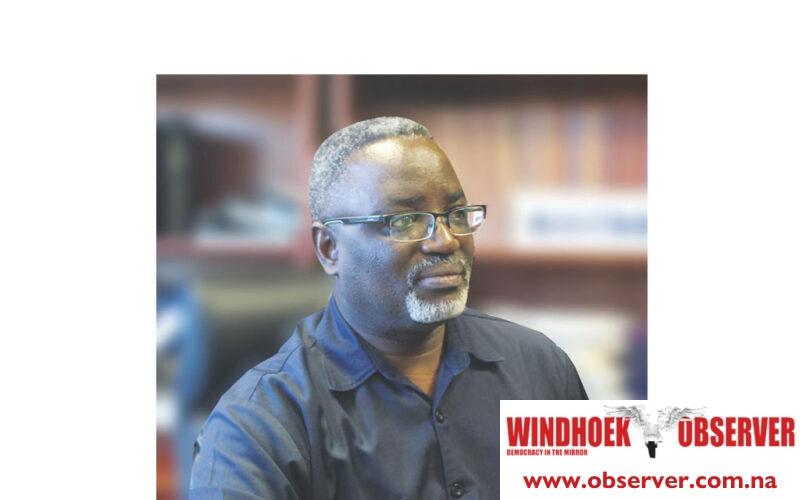
PAUL T. SHIPALE (with inputs by Folito Nghitongovali Diawara Gaspar)
With only a few days remaining before the anniversary commemorations of three of Namibia’s most distinguished leaders, one cannot help but pause and reflect not only on their lives, but on how the nation chooses to remember them. The month of February carries profound historical and emotional weight for Namibians. It marks the remembrance of Dr Abraham Iyambo on 2 February, the late Third President of the Republic of Namibia, Dr Hage G. Geingob, on 4 February, and the Founding Father of the Namibian Nation and First President of our Republic, His Excellency Dr Sam Shafiishuna Nujoma, on 8 February.
These are not merely dates on a calendar. They are moments that invite national introspection. They compel us to ask difficult but necessary questions as to how do we honour those who shaped the Republic? What form should remembrance take in a nation built on sacrifice? And are we doing enough to preserve their legacy beyond the present generation? Globally, honouring presidential memory is recognized as a cornerstone for strengthening national and democratic identity, guarding against historical amnesia, and consolidating a nation’s true narrative for future citizens.
It is encouraging to acknowledge that following the passing of President Hage G. Geingob, deliberate and visible steps were taken to honour his memory. Among the most notable was the naming of the major highway from Hosea Kutako International Airport after him, a symbolic yet lasting tribute. Implemented under the leadership of his long-time friend and successor, the Fourth President of the Republic of Namibia, Dr Nangolo Mbumba, this act demonstrated foresight and an understanding of the power of permanent national symbols. Such gestures ensure that future generations encounter history not only in textbooks, but in the living infrastructure of the nation. This aligns with proven methods of commemoration, where symbols in public space integrate foundational figures into the daily landscape of national consciousness.
Yet, while this example sets a commendable standard, it also raises expectations, particularly regarding the commemoration of the Founding Father of the Namibian Nation, Dr Sam Shafiishuna Nujoma. As the architect of Namibia’s independence and the first Head of State of a free Namibian nation, his contribution transcends ordinary political leadership. His life embodies the struggle, resilience, and vision that culminated in sovereignty.
This reality naturally leads to an unavoidable question; Should the first anniversary of the passing of a Founding Father be marked only by a simple ceremony such as laying a wreath at his grave or by institutions that preserve history itself? If highways can carry a name, why should institutions not carry a legacy? The most enduring national legacies are built through a multifaceted approach that pairs symbolic acts with institutional and archival foundations, the professional preservation of documents and artifacts and education and public access, making history available for study and engagement.
It was therefore reasonable to hope that this milestone would be accompanied by landmark initiatives of national and historical importance. Among such initiatives could have been the official declaration of Dr Nujoma’s office or residence as a site of national heritage, or the establishment of a National Museum dedicated to his life, leadership, and the liberation struggle. Such a museum would not merely function as a memorial, but as a living educational and cultural institution preserving archives, narratives, and artifacts that define Namibia’s journey to independence. If we can benchmark with countries like South Africa, Tanzania and Ghana, they honour their Founding Fathers. Take a Nation like Angola for instance, they have established formal commissions to unify such efforts, while others create public digital repositories to ensure permanent access, understanding that an archive locked away is a memory silenced.
Museums and heritage sites are not luxuries but pillars of nation-building. They will safeguard collective memory and will provide young Namibians with a tangible connection to their past. One must ask, what will a 20-year-old Namibian see, visit, or experience that fully explains who Dr Sam Nujoma was and why his leadership mattered? If the answer is limited to annual speeches and televised commemorations, then the risk is clear, history becomes distant, abstract, and vulnerable to erosion. As observed in other democracies, the core task is not to uncritically glorify the past, but to preserve its truth so that society can understand it and learn from its most valuable lessons.
Ceremonies honour the moment, but institutions preserve a legacy. Without the latter, remembrance risks becoming symbolic rather than substantive.
The absence, at least publicly, of announcements regarding major commemorative initiatives invites concern and reflection. It is entirely possible that extraordinary plans are underway and yet to be unveiled. If so, the nation will welcome them with pride and gratitude. However, if not, then this moment must serve as a gentle but firm reminder that the preservation of national heritage does not happen by chance. It requires intentional action, political will, and a shared sense of responsibility, much like the legal frameworks enacted elsewhere that mandate the state’s duty to protect this heritage.
Commemoration must go beyond wreath-laying and protocol. While such rituals remain important, they must be complemented by enduring projects that speak to permanence, education, and national unity. Abraham Iyambo, Dr Hage G. Geingob, and Dr Sam Shafiishuna Nujoma each left indelible marks on Namibia’s political, social, and developmental landscape. Their anniversaries should inspire initiatives that future generations can touch, enter, study, and learn from.
As the nation approaches these solemn dates, the responsibility does not rest with the state alone. Citizens, institutions, and families alike share a role in shaping how history is preserved. A nation that remembers well equips its future with identity, confidence, and direction.
History will ultimately judge not only how we were led, but how we chose to remember those who led us. When future generations ask what we did to honour our Founding Father and the leaders who followed him, may the answer be found not only in speeches archived, but in legacies preserved.
For now, perhaps there is still more to hear, more to see, and more to celebrate, events anticipated but not yet announced. Until then, the call remains clear, our heroes deserve remembrance that is as bold and enduring as the nation they helped to build.
Disclaimer: The opinions expressed here do not necessarily reflect those of our employers or this newspaper but are solely our personal views as citizens and pan-Africanists.


