

Patience Makwele
The Namibia Revenue Agency (NamRA) has denied auctioning counterfeit goods, saying all such items are destroyed in line with the law.
The response follows concerns from traders and the public over goods being sold through auctions conducted by Aucor Auctioneers.
Questions grew after an auction notice titled “NamRA warehouse clearance auction” was shared online.
The notice stated that goods would be auctioned from 18 to 20 March at the Brendan Simbwaye Complex in Rundu.
NamRA said there has been no change in policy.
“All counterfeit goods confiscated are disposed of strictly through destruction. These goods are not eligible for auction under any circumstances,” said NamRA’s chief for strategic communications and support engagement, Steven Yarukeekuro Ndorokaze.
He said only non-counterfeit goods are auctioned and only after legal processes are followed.
According to NamRA, once goods are detained, owners are given notice and three months to comply.
This process, he said, includes submitting documents and paying duties.
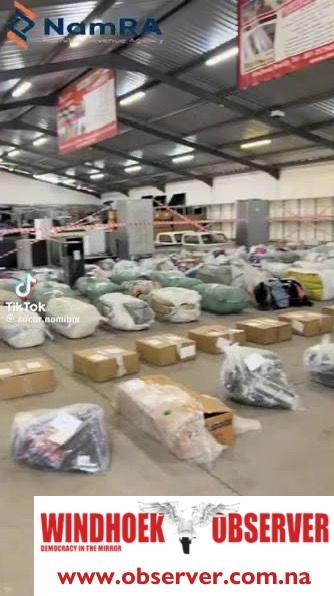
Ndorokaze said goods are only auctioned if the owner fails to comply within that period.
NamRA said it has destroyed counterfeit goods worth millions of Namibian dollars in the past, including items valued at around N$5 million.
Despite the clarification, some ‘order with me’ operators say the process is not clear.
A trader, Selma Haipinge, said her goods were confiscated after being labelled counterfeit.
“I ordered hair products and clothes from China last year worth N$7 000. They confiscated my order. When they called, I was told I have to pay more than N$9 000 because of VAT, declaration and storage fees. Now I am seeing almost the same type of products on Auccor being auctioned. How fair is this?”
Another trader raised similar concerns.
“If those goods are not counterfeit, then why were they taken in the first place? And if they can be sold, why were we not given the option to reclaim them?” the trader said.
“At the end of the day, people lose money and businesses suffer. We just want clear answers.”
Social justice activist Michael Amushelelo also questioned the process.
“I find it absurd that a state-owned enterprise such as NamRA would rather sell confiscated goods through an auction and use NDAs to conceal the details. These agreements appear designed to hide how much Auccor profits from the auctions and the procedures followed to award them as the preferred auctioneer,” he said.
He stated that smaller traders might face greater impact than larger corporations.
“Over the years, we have seen that there are no safeguards to ensure small traders are protected. Many work on an ‘order-with-me’ basis, where customers pay upfront. When their goods are seized, it damages their reputation and leaves them owing clients they cannot repay. The same flexibility given to big businesses should apply to these traders,” he said.
Traders also raised concerns about costs linked to imports.
Meanwhile, NamRA’s commissioner, Sam Shivute, told the Windhoek Observer that import charges can reach up to 65.1% of the value of goods.
“Sometimes the costs are already too high and then on top of that your goods are taken. That is money we borrowed or saved. When you lose it like that, it affects your whole business,” another trader said.
NamRA said proceeds from auctions are paid into the state revenue account and used for national development.
The agency did not disclose how much has been raised.
When the Windhoek Observer reached out to Aucor Auctioneers, it said it could not provide details on the auctions.
“Please note that our contract with NamRA contains non-disclosure agreements and I cannot discuss the matter. For any information regarding these auctions, please contact the NamRA communications department,” the company said.


