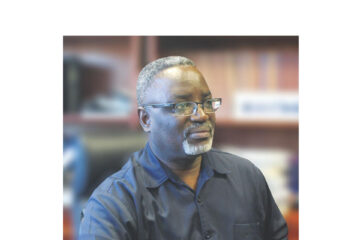
Fransina Kahungu
On International Women’s Day, 8 March 2026, we are intentionally choosing to move beyond celebration without empowerment and confront a deeper question: how do empowered women empower others? This year’s theme is Give to gain. It has often been said that women do not help other women rise once they themselves have risen. Whether this has merit or not is yet to be properly studied.
However, one might confidently state that real power is influence over policy. It is the ability to shape women and not just symbolise change. It is the ability to look back and say these are the 10, 20, or thousands of women whose lives have been better because I decided to share whatever little knowledge, skill or experience I may have. It is the ability to shape systems that determine whether a girl in a rural village completes school and whether a woman entrepreneur can access capital without bias.
The issue of empowerment is a key factor that must be addressed at all levels. What does it mean realistically? For the child at school level, it is ensuring that that child is tutored in subjects they struggle with; it is ensuring that young girls that rely on older men to fund their basic toiletries are given start-up seed capital to purchase stock and scale up with their businesses.
This is true empowerment. It is ensuring that young women are trained on how to answer questions in interviews and how to make their CVs stand out in the job market. This is the type of change that can impact women forever, and this is the empowerment that the Swapo Party Women’s Council is striving for in 2026.
The SWAPO Party Women’s Council was not formed to decorate politics. It was formed to influence it. It was built by women who understood that liberation without participation is incomplete. Women must be taught how to participate, how to argue intellectually and how to make their case without feeling like they themselves are not liked. Today, the responsibility shifts to our generation.
We must redefine what leadership by women means. It must mean competence. It must mean preparation. It must mean women who are not only mobilised during elections but who also understand budgets, governance, procurement, lawmaking, and economic strategy. Political maturity is power. Policy literacy is power.
Financial independence is power, and that is more than just a slogan. Women’s Day should challenge us to ask whether we are building a pipeline of leaders or a cycle of spectators. When that young woman who has been in the Swapo Party Women’s Council finally makes it to parliament or cabinet as a minister, prime minister or even as the president, will she have the capacity to carry out the mandate?
The Women’s Council has a unique role in this moment. It must be a school of leadership. A platform where young women are mentored into public service, where entrepreneurs are trained to scale sustainably, where rural voices shape national conversations, and where political participation is paired with technical skill.
Across Namibia, women are carrying households, driving small businesses, leading churches, running community initiatives, and serving in public office. The capacity is already there. What remains is intentional coordination. When women organise around policy and deep capacity building, not personality, the results are transformative.
This Women’s Day, we celebrate women but challenge all women’s organisations to ask themselves this pertinent question. Are we empowering women and building deep capacity for the positions we have long advocated for? Or are we merely spectators advocating for change whilst never believing that change will ever come? History shows that nations rise when women rise in substance, not in symbolism.
The Swapo Party Women’s Council is determined to raise women who are bold enough to demand more and disciplined enough to prepare for it.
*Fransina Kahungu is a renowned Namibian politician and a formidable force in public leadership. She previously served as deputy mayor of Windhoek in 2016 and 2017 and later as mayor of Windhoek in 2019. In 2022, she was elected secretary of the Swapo Party Women’s Council.