
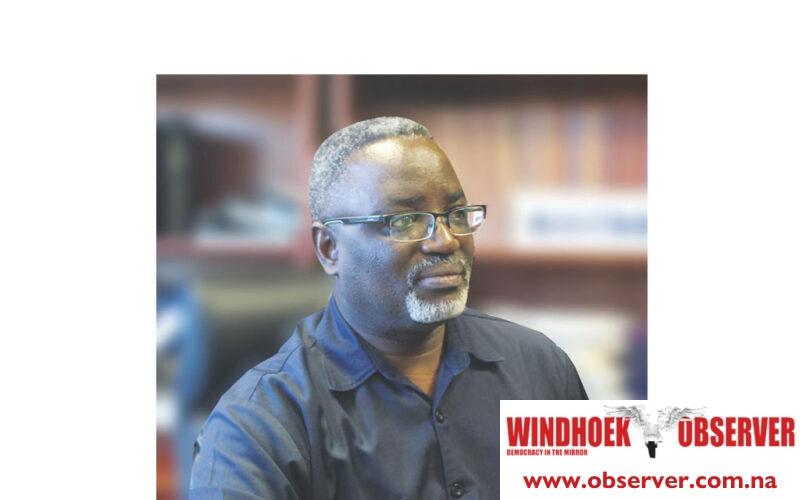
Paul T. Shipale (with inputs by Folito Nghitongovali Diawara Gaspar)
The international system is undergoing one of the most profound transformations since the end of the Cold War. Rising geopolitical tensions, technological rivalries, economic competition, and persistent regional conflicts are reshaping the architecture of global power. What many analysts increasingly describe is not simply a series of isolated crises, but the gradual emergence of a new world order.
Within this evolving landscape, the diplomatic posture adopted by Namibia’s eighth administration deserves careful attention. By reaffirming a policy rooted in strategic neutrality, non-alignment, multilateral engagement, and pragmatic diplomacy, Namibia is positioning itself thoughtfully within an increasingly complex and competitive international environment.
This approach should not be mistaken for hesitation. On the contrary, it reflects strategic calculation in a rapidly changing global system.
The transition toward a multipolar world
Throughout much of the twentieth century, global politics was structured around bipolar rivalry between the United States and the Soviet Union. This confrontation, known as the Cold War, shaped international alliances, economic relations, and security doctrines for decades.
The collapse of the Soviet Union in 1991 temporarily ushered in what many scholars described as a unipolar moment, characterised by the predominance of the United States.
Yet that phase increasingly appears to have been transitional.
The rise of China as an economic and technological powerhouse, the geopolitical resurgence of Russia, and the growing influence of emerging economies indicate that the world is moving toward a multipolar order defined by several competing centres of power.
Unlike earlier eras, contemporary power competition rarely unfolds through direct military confrontation between major powers. Instead, rivalry manifests across multiple domains:
• economic sanctions
• technological competition
• cyber operations
• diplomatic pressure
• proxy conflicts
• information warfare
These dynamics reflect the gradual transformation of global governance structures and signal the reconfiguration of the international balance of power.
Regional conflicts as indicators of systemic change
Several contemporary conflicts illustrate the tensions inherent in this emerging order.
The war between Russia and Ukraine has reopened strategic fault lines in Europe and revived debates about the continent’s security architecture.
In the Middle East, the ongoing confrontation involving the USA, Israel and Iran, including what others call the ‘Axis of Resistance’ with militias in Iraq, Hezbollah in Lebanon, the Houthis in Yemen and the organisation Hamas, continues to destabilise an already fragile geopolitical landscape.
At the same time, growing tensions between the United States and China, particularly regarding Taiwan, reveal a strategic contest for leadership in technology, trade, and military capability.
Individually, these crises do not constitute a global war. Collectively, however, they reveal the contours of a systemic transformation, a world increasingly defined by persistent strategic competition among multiple powers.
This evolving environment forms the backdrop against which smaller and medium-sized states must define their diplomatic strategies.
Strategic choices for medium and small states
For countries outside the circle of great powers, the emerging global order presents complex strategic dilemmas.
Aligning too closely with a single major power may offer short-term economic or security benefits, but it also carries significant risks:
• loss of diplomatic flexibility
• excessive economic dependency
• exposure to geopolitical rivalries
Conversely, isolation from international partnerships can limit access to markets, investment, and technological cooperation.
The response adopted by Namibia’s eighth administration appears to represent a balanced strategic alternative.
Rather than rigid alignment or disengagement, Namibia has pursued a policy of pragmatic neutrality and non-alignment combined with active multilateral engagement.
This approach is grounded in several key principles:
• preservation of national sovereignty
• diversification of international partnerships
• commitment to multilateral diplomacy
• avoidance of rigid geopolitical alignments
In international forums, particularly within the United Nations, Namibia has frequently adopted cautious positions on contentious global issues, including abstentions on sensitive resolutions but also a strong stance and solidarity with Palestine, Cuba, Zimbabwe and Western Sahara, demanding self-determination and the lifting of sanctions and economic blockades. Such choices reflect an effort to balance historical relationships, economic interests, and geopolitical realities.
Far from passive, this stance represents a deliberate strategy designed to safeguard national autonomy in an era of great power competition.
Historical memory and diplomatic culture
Namibia’s diplomatic posture is deeply influenced by its historical experience.
The country’s struggle for independence unfolded within a complex international environment in which African liberation movements often received support from countries aligned with the former socialist bloc. At the same time, Namibia’s eventual independence in 1990 was achieved through a multilateral diplomatic process under the auspices of the United Nations.
This dual historical experience helped shape a diplomatic culture that places strong emphasis on:
• sovereignty and self-determination
• multilateral cooperation
• respect for non-interference
• balanced engagement with global partners
Consequently, the foreign policy orientation of Namibia’s eighth administration reflects not only strategic adaptation but also continuity with the country’s diplomatic heritage.
Economic Security in a Competitive Global System
In the twenty-first century, national security extends far beyond traditional military considerations.
Global supply chains, energy markets, financial systems, and technological infrastructures are now deeply intertwined with geopolitical competition. As a result, crises occurring in distant regions can have immediate economic consequences for smaller economies.
For Namibia, these impacts may manifest in several ways:
• volatility in global energy prices
• rising costs of imported food and consumer goods
• disruptions in international supply chains
• fluctuations in foreign investment flows
These dynamics highlight a defining feature of the emerging world order: economic resilience has become a strategic dimension of national security.
Regional cooperation as strategic stability
Another central pillar of Namibia’s geopolitical strategy lies in regional cooperation.
As a member of the Southern African Development Community (SADC), Namibia participates in initiatives designed to promote economic integration, political stability, and collective security across Southern Africa.
In an increasingly uncertain global environment, regional institutions can serve as stabilising mechanisms. By strengthening economic ties and diplomatic coordination among neighbouring states, they enhance collective resilience against external shocks.
For Namibia, regional cooperation functions as an additional layer of strategic stability within a volatile international system.
Namibia in the emerging global architecture
The policy orientation of Namibia’s eighth administration reflects a clear recognition that the international system is entering a new phase.
In a world characterised by shifting alliances, technological rivalry, and geopolitical competition, countries that preserve strategic flexibility are often better positioned to protect their interests.
Namibia’s diplomatic approach suggests an understanding that neutrality and non-alignment when carefully managed can serve as instruments of geopolitical agency rather than passivity.
By maintaining balanced relations with multiple global actors while strengthening regional partnerships, the country enhances its ability to navigate uncertainty and pursue long-term development objectives.
Conclusion: Strategy in an age of transformation
The emergence of a new world order rarely occurs through a single dramatic event. Instead, it unfolds gradually through geopolitical competition, economic shifts, and institutional transformation.
Namibia’s current diplomatic posture indicates a clear awareness of these evolving realities.
By prioritising sovereignty, strategic neutrality, multilateral engagement, and regional cooperation, the eighth administration is positioning the country to navigate an increasingly complex global environment.
In the decades ahead, the resilience of nations may depend less on the scale of their military or economic power than on the clarity of their strategic vision and their ability to interpret the changing dynamics of the international system.
In such a world, neutrality and non-alignment are not indecision. It is a strategy.
Disclaimer: The opinions expressed here do not necessarily reflect those of our employers or this newspaper. They represent our personal views as citizens and pan-Africanists.


