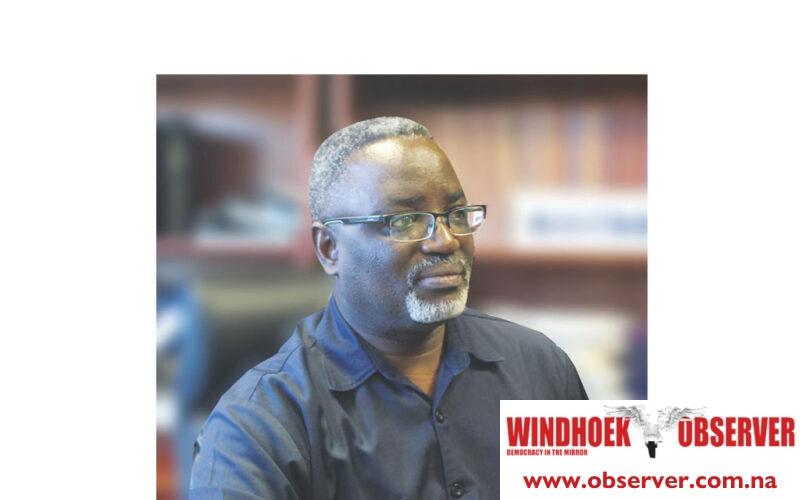
PAUL T. SHIPALE (with inputs by Folito Nghitongovali Diawara Gaspar)
Namibia’s green hydrogen ambitions were once framed as a historic leap: a small Southern African nation powering Europe’s decarbonisation, creating hundreds of thousands of jobs, and positioning itself as a global climate-finance success story. International headlines hailed a “once-in-a-generation opportunity.”
Today, the narrative is markedly different.
Senior executives have exited the programme. Donor support has thinned. Anchor investors have stepped back. And the export-led hydrogen vision that once sat at the centre of Namibia’s economic and climate strategy is now being quietly recalibrated behind closed doors.
This is not a story of technological failure, nor of scandal. It is a cautionary account of what happens when political optimism, donor dependency, and volatile global markets collide when industrial ambition races ahead of governance capacity and financial reality.
The original fault line, donor dependency
From its inception, Namibia’s green hydrogen programme relied heavily on externally announced funding commitments, rather than on sovereign fiscal allocations or commercially secured finance.
This distinction matters. A commitment is a political or programmatic pledge; a contract is a legally binding agreement; and a disbursement is the actual transfer of funds. Only the last materially reduces fiscal and delivery risk.
Publicly disclosed funding structures illustrate the vulnerability:
• Germany announced support of up to €40 million through a combination of grants, technical assistance, and market-support instruments such as H2Global. These announcements constituted commitments, not guaranteed transfers. Instruments like H2Global, in particular, operate by subsidising European buyers rather than by disbursing funds to producer countries, leaving Namibia exposed to external market conditions.
• The European Union announced approximately €36.9 million in programme envelopes linked to infrastructure, feasibility studies, and technical assistance. Additional amounts often cited such as €13 million for the HyIron pilot and €12.2 million for the Daures project largely took the form of project-specific contracts, frequently managed by external implementers and not always under direct Namibian fiscal control.
• Disbursements, by contrast, lagged behind announcements and were often phased, conditional, or opaque. Even within programme structures, it proved difficult to track what funds had actually been transferred, when, and to whom raising persistent concerns about transparency, accountability, and planning certainty.
The core misjudgment was the implicit elevation of commitments to the status of capital. Internal assessments point to the absence of a contingency reserve, sovereign guarantees, or a commercially viable fallback once European policy priorities and market dynamics shifted.
“The programme relied on external confidence, not domestic economic grounding. When Europe pivoted, Namibia was left exposed,” one former adviser observed.
Executive exits and governance stress
Between late 2024 and early 2025, the Programme Head, Legal Manager, and Technical Head resigned. Official communications described these departures as routine transitions. Their timing, however, reveals deeper structural stress.
The exits coincided with:
• Reduced clarity and momentum around German support mechanisms,
• Approval delays following a change in political administration, and
• The effective sidelining of hydrogen in key national policy and planning frameworks.
Senior executives increasingly carried public accountability for delivery timelines and investor expectations tied to externally driven funding assumptions, without firm budget certainty or sovereign financial backing.
“The risk profile shifted overnight,” an insider explained. “Remaining would have meant carrying reputational and legal exposure without sovereign cover.”
These departures were neither scandals nor acts of protest. They were rational responses to escalating institutional risk, governance ambiguity, and personal liability exposure serving as early warning signals of a programme operating beyond its structural foundations.
The investor retreat, europe reassesses
Namibia’s hydrogen strategy was premised on sustained European demand and predictable offtake. That premise weakened rapidly.
German utility RWE ( is one of Europe’s largest energy utilities, headquartered in Germany, with major operations in power generation, renewable energy, and energy trading), a key anchor investor, stepped back amid broader market and policy shifts:
1. High European energy prices and subdued industrial growth undermined the economics of imported green hydrogen.
2. European policy increasingly prioritised domestically produced hydrogen for hard-to-abate sectors.
3. The U.S. Inflation Reduction Act redirected global capital toward lower-risk, heavily subsidised American projects.
Europe did not abandon hydrogen as a technology. It reassessed the feasibility of large-scale imports from frontier markets under prevailing economic conditions. Namibia’s strategy had implicitly assumed that European demand structures would remain stable. They did not.
Jobs promises and economic reality
Early public projections suggested employment figures as high as 250,000 jobs. Energy economists consistently cautioned otherwise. Green hydrogen production is capital-intensive, not labour-intensive:
• Construction employment is temporary,
• Operational roles are limited and highly specialised,
• Local employment multipliers are far lower than public narratives implied.
“The jobs narrative was political theatre,” a regional energy analyst observed. “It was never grounded in how hydrogen projects actually function.”
As optimism hardened into expectation, the gap between rhetoric and reality widened, eroding public trust.
Internal reality vs. Public messaging
Externally, communications projected certainty, momentum, and inevitability. Internally, programme documentation reflected a more cautious reality: conditional funding, hesitant investors, governance gaps, and rapidly shifting assumptions.
This divergence produced an accountability vacuum, exposing taxpayers, donors, and investors to unanticipated risk and diminishing institutional credibility.
What is ending and what may endure
Ending:
• Donor-driven industrialisation at breakneck speed
• Assumed European offtake guarantees
• Mega-projects optimised for political signalling rather than financial resilience
Enduring:
• Namibia’s exceptional renewable energy potential
• Hydrogen’s long-term strategic relevance
• Regional and domestic industrial applications
• The possibility of a smaller, phased, locally anchored hydrogen value chain
Policymakers are now pivoting quietly toward staged development, local demand, and tighter fiscal discipline. It is a slower path, but a more sustainable one.
Lessons for Africa’s industrial transition
Namibia’s experience offers sobering but transferable lessons:
1. Climate finance is an instrument, not a strategy.
2. Sovereign financial commitment is indispensable.
3. Incremental value-chain development reduces systemic risk.
4. Transparent public communication preserves credibility.
The executive departures were signals, not scandals. They pointed to deeper structural vulnerabilities rooted in donor dependency and optimistic assumptions.
Conclusion: When ambition meets discipline
Namibia’s green hydrogen programme did not collapse it advanced faster than its economic, fiscal, and governance foundations could support. Conditional external funding, shifting global markets, and untested assumptions exposed the fragility beneath the ambition.
If Namibia consolidates, re-anchors hydrogen development in domestic value creation, and rebuilds on disciplined governance and sovereign control, this episode may ultimately be remembered not as failure, but as the moment ambition met reality.
That is often how serious industrial transitions truly begin. Disclaimer: The opinions expressed here do not necessarily reflect those of our employers or this newspaper. They are solely our personal views as citizens and Pan-Africanists.