
Allexer Namundjembo
The Bank of Namibia (BoN) says deterioration of new coins in circulation can be influenced by factors beyond production quality.
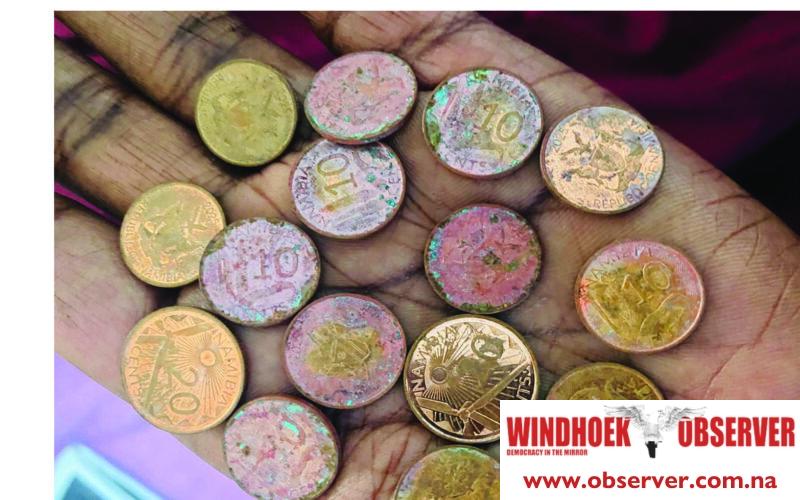
This follows concerns from the public that some of the country’s new coins show signs of corrosion after exposure to water. The coins have been in circulation for less than a year.
The central bank told the Windhoek Observer on Wednesday that it is aware of the complaints and is reviewing the matter.
“The Bank of Namibia has taken note of the concerns raised. The matter will be considered in line with the bank’s established processes, which include review and assessment of issues brought to its attention,” said BoN’s deputy director for corporate communications and sustainability Naufiku Hamunime.
Hamunime said BoN applies strict quality control during production.
“In relation to currency issuance, the bank applies comprehensive quality assurance and control measures throughout all critical stages of production. These processes are intended to ensure that currency placed into circulation complies with relevant specifications and applicable standards,” she said.
According to BoN, the damage to coins can occur after they enter circulation.
“It is further noted that, in the past, the bank has observed with concern various instances of Namibian currency in circulation exhibiting different forms of damage or deterioration,” said Hamunime.
“As part of its assessment, consideration is therefore given to a range of factors, including post-issuance handling and usage and the possibility of intentional mutilation or defacement.”
BoN said each case is reviewed individually and further evaluation will be done if needed.
The concerns follow earlier warnings from BoN after incidents of damaged coins were reported soon after the new series was introduced last year.
At that time BoN said damaging or defacing legal tender is illegal and is punishable by a fine of up to N$50 000 or imprisonment of up to three years.
BoN maintains that the new coins meet international standards and continues to run awareness campaigns against damaging currency.
Economist Johannes Kalimba told the Windhoek Observer on Thursday that visible wear can affect public confidence.
“When coins show signs of wear, like rust or corrosion, it can create an impression of low quality and diminish confidence in their durability,” he said.
He said widespread issues could have wider effects.
“Although a handful of declining coins may not lead to major economic disturbances, widespread problems could carry more extensive effects. For instance, if coins often turn unusable or are seen as poor quality, it could lead to higher expenses for the central bank or the government because of the necessity for replacement and re-minting. Furthermore, the reduced confidence may result in a preference for alternative payment options, like electronic transactions, potentially affecting cash circulation rates,” he said.
Kalimba said rust may point to material concerns.
“Making sure that coins are sturdy and resistant to environmental conditions is crucial for preserving their lifespan and the overall integrity of the monetary system,” he said.
Member of parliament George Kambala said the issue raises broader questions about trust.
“The issue of the coins introduced by the Bank of Namibia showing signs of deterioration is not a small technical defect. It raises legitimate concerns about quality assurance, procurement standards, and long-term durability. These are not cosmetic matters. They go to the heart of confidence in our monetary system,” he said.
He said the issue could affect public perception.
“People start asking: how reliable is this currency? Was due diligence properly done? Are we cutting corners where we cannot afford to? Now, to your question on economic impact. Let us be measured but honest. This alone will not destabilise the economy. However, confidence in a currency is cumulative. It is built on consistency, credibility, and competence. Small failures, if ignored, can compound into larger perceptions of institutional weakness. And perception, in economics, often becomes reality,” Kambala said.
Kambala called for transparency from the Bank.
“At a broader level, Namibia must begin to think beyond traditional currency models. The future is digital, traceable, and resilient. Incidents like this should accelerate our thinking around modernizing our payment systems, reducing over-reliance on physical currency, and investing in secure digital financial infrastructure,” he said.
“This is not about alarmism. It is about accountability. A nation’s currency must inspire confidence at every level, from the markets to the streets of Katutura. If there are cracks, however small, they must be addressed decisively”.


