
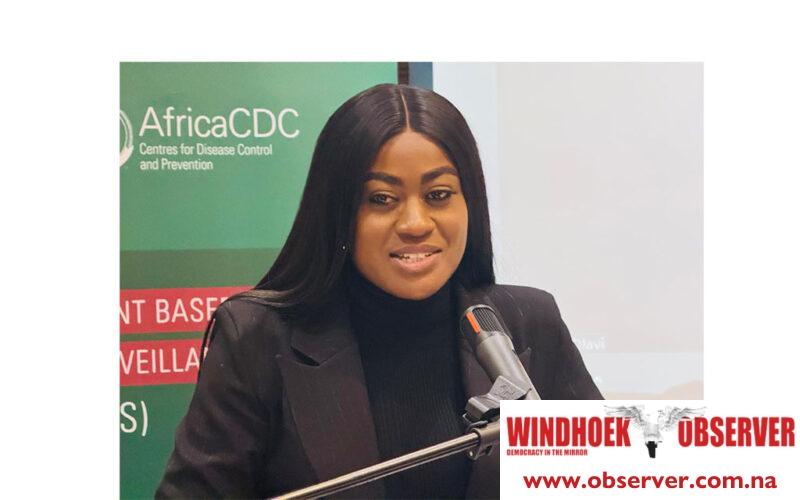
Allexer Namundjembo
A member of parliament has raised concerns about the readiness of the public health system ahead of the planned transition of senior public servants to public facilities from 1 April 2026.
Rosa Mbinge-Tjeundo of the Popular Democratic Movement (PDM) gave a notice of questions directed at the government, asking whether hospitals can absorb the expected influx of senior officials currently covered under the Public Service Employees Medical Aid Scheme (Psemas).
The reform follows a directive by President Netumbo Nandi-Ndaitwah requiring senior government officials to use public healthcare facilities.
Mbinge-Tjeundo said public hospitals already face overcrowding, staff shortages and medicine stock-outs. She warned that adding more patients without fixing these problems could increase pressure on facilities.
“What concrete readiness assessment has the Ministry conducted to ensure public hospitals can absorb the initial influx of senior government officials without further straining the already overcrowded facilities?” she asked.
She said she would also seek clarity on whether Psemas contribution rates will remain unchanged, how funds will be managed during the transition and whether public servants will still access private care for chronic and specialised treatment.
She also wants to know what measures will protect patients’ rights and quality of care, and how waiting times will be reduced.
Days earlier, health minister Dr Esperance Luvindao briefed parliament on what government calls Vision April 2026.
Luvindao said the ministry completed a national facility readiness assessment in September 2025 to guide system improvements.
“We are not asking public servants to step into a broken system; we are asking them to step into a system that is currently undergoing its most aggressive strengthening programme since independence,” she said.
She told lawmakers that about 118 936 government employees are covered by Psemas, which spends about N$3.9 billion each year, mostly in the private sector. She said more than 85% of the population, about 2.57 million people, rely on public facilities operated by the Ministry of Health and Social Services, which has a budget of about N$12.27 billion.
Luvindao said over 2 000 additional health posts were funded in the 2025/26 mid-year budget review. By mid-January 2026, 1 262 of those posts had been filled. The rest are expected to be filled by March.
She said the ministry has shifted to direct procurement of medicines from manufacturers, with a target of 95% stock availability. Procurement of medical equipment, infrastructure maintenance and additional ambulances is under way.
The reform will roll out in phases. From 1 April 2026, political office bearers and senior public servants will access services at seven designated facilities, including Windhoek Central Hospital, Katutura Intermediate Hospital, Rundu Intermediate Hospital, Keetmanshoop District Hospital, Oshakati Intermediate Hospital, the Walvis Bay–Swakopmund Hospital Complex and Onandjokwe Intermediate Hospital.
Luvindao said patient-flow systems will be introduced at these facilities to manage waiting times. The model will be piloted in March 2026. She said referral arrangements with private providers will continue where specialised services are not yet available in the public sector.
During the same sitting, Frederick Shitana of Affirmative Repositioning questioned whether assessments reflect conditions at rural clinics.
“My brother was bitten by a snake earlier this year and when he was taken to the clinic, there was no medicine and the ambulance which transported him to the hospital took hours to arrive,” Shitana told Parliament.
He said planning should focus on remote clinics and not only urban facilities. He added that the clinic at Parliament lacked essential medication.


