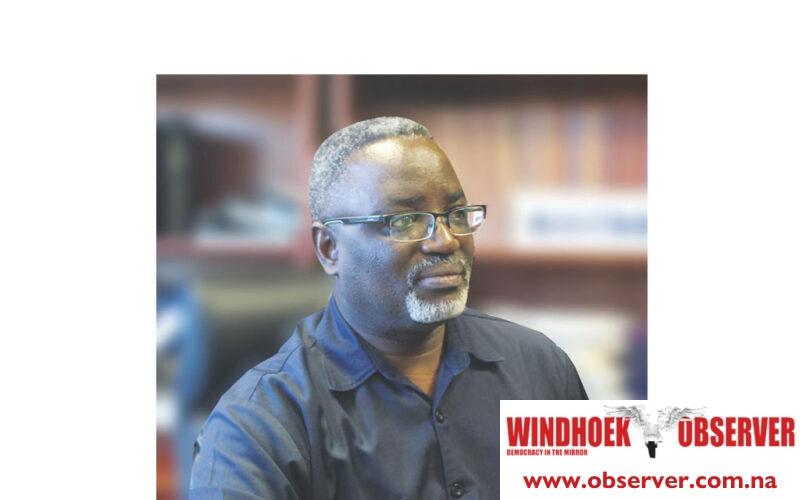
PAUL T. SHIPALE (with inputs by Folito Nghitongovali Diawara Gaspar)
President Netumbo Nandi-Ndaitwah observes that Modestus Amutse’s leadership record at the regional level strengthens the experience he brings to his new role as Minister of Industries, Mines, and Energy. We agree with those who are saying that this ministry needs someone at the helm who has outstanding analytical and communication skills, a deep understanding of energy and mining policies and leadership experience in the field. Someone who has the capability to integrate mining into the sixth National Development Plan (NDP6) to enhance implementation by aligning the sector with national economic and social goals, as President Netumbo Nandi-Ndaitwah said, the eighth administration is focused on quality service delivery, accountability and the implementation of national priorities, including advancing industrialisation, strengthening the mining sector and accelerating progress in the energy space to support sustainable development across all 14 regions.
We are not yet sure if this appointment was solely based on meritocracy or simply viewing next year’s ruling party’s congress, as the newly appointed minister is one of those elected in the top echelons of the party list during the 2024 elections. Be that as it may, we are convinced that the President would sail and cruise easily in any popularity contest, as the citizens and the international community highly value her leadership. Yet one cannot help but pause and wonder: can experience alone guarantee that the extraction of our underground wealth will serve the long-term well-being of the nation, or will it overshadow other forms of enduring prosperity? Is it true that the wealth buried underground surpasses the wealth that comes from celebrating and sustaining what lies in plain sight – our landscapes, our wildlife, and our culture?
An elder’s welcome carries a truth that echoes through the ages:
“We do not inherit the earth from our ancestors; we borrow it from our children. Come, let us show you how we care for it.”
This is the soul of genuine tourism: a reciprocal covenant that enriches host and guest, a bond far deeper than transaction.
Namibia’s tourism sector is not merely recovering; it is scripting a new paradigm for resilient, sustainable growth in Africa. By 2025, the nation had confidently surpassed pre-pandemic records, setting new benchmarks in arrivals, revenue, and accommodation. Driven by iconic landscapes, enhanced global connectivity, and a profound national ethos of stewardship, Namibia is emerging as a blueprint for transformation led not by extraction, but by invitation.
The Fish River Canyon: A monument to time
To stand before the Fish River Canyon is to witness deep time made visible. Stretching over 160 kilometres, this sculpted expanse is more than a scenic wonder; it is Earth’s autobiography written in rock. Its cliffs and riverbed tell a multimillion-year story of shifts and erosion, a breathtaking testament to the forces that shape continents.
Here, tourism transcends sightseeing. The canyon is a living classroom, where awe fosters understanding and respect. It embodies a fundamental truth: enduring wealth is not extracted from below but sustained from above. Such landscapes prove that preserved natural heritage generates lasting economic, cultural, and scientific value, a form of prosperity finite minerals can never match.
Mining vs tourism: The economic reckoning
For resource-rich nations, the question is urgent: does wealth from underground resources truly outlast the value of the living landscapes that draw the world?
Evidence increasingly champions tourism. Mining delivers concentrated, short-term revenue, but tourism builds broader, resilient, and inclusive economies.
Tourism Creates Widespread Employment: It is inherently people-centred, generating diverse livelihoods for guides, artisans, rangers, drivers, and countless entrepreneurs. Mining, while significant for GDP, is capital-intensive, typically employing less than 2% of the workforce.
Tourism Circulates Wealth: Every traveller’s journey sustains a vast ecosystem of local agriculture, handicraft markets, transport, retail, and SMEs, multiplying benefits through communities and fostering regional development.
A sector in full momentum
The data confirms a robust rebound:
Revenue: Projected at N$4.6 billion in 2025 (5.5% growth).
Arrivals: Expected 7.3% growth, fuelled by digital platforms.
Occupancy: Q3 2025 rates hit 65.9%, surpassing pre-pandemic levels.
Diversified source markets, from Europe’s leading DACH region to rising Southern European interest and steady domestic travel, underscore this vitality. The sector’s contribution reverberates through GDP (the tertiary sector grew 3.9% in Q2 2025) and tens of thousands of jobs nationwide, with regional strengths from the cultural North to the leisure South.
Why tourism builds a lasting legacy
Mining has a lifecycle: it is finite, geographically concentrated, and can leave enduring scars. When the resource depletes, operations cease.
Tourism, by contrast, is renewable. If landscapes and wildlife are protected, they regenerate income and sustain communities indefinitely. Namibia’s heritage sites, Etosha, Sossusvlei, the Skeleton Coast, and the Fish River Canyon, are not mere postcards; they are perpetual economic engines. Sacrificing them for short-term extraction is akin to selling the family home to pay a single bill.
Toward a balanced future
This is not a dismissal of mining. Responsible mineral development can coexist with a thriving tourism sector, but it must never compromise the ecological and scenic assets that form the core of Namibia’s identity and long-term prosperity.
True national wealth is measured in:
Sustained employment and entrepreneurial opportunity.
Vibrant, resilient communities.
Healthy ecosystems and protected landscapes.
Stable, diversified revenue streams.
A shared sense of national pride.
Tourism nurtures all these, without depleting the inheritance we hold in trust.
Conclusion: The wealth that stands in the light
Namibia stands at a defining crossroads. Mining can contribute to development, but tourism builds a legacy, fostering lasting prosperity, empowering communities, and safeguarding the soul of the nation.
As the enduring silence of the Fish River Canyon reminds us, the greatest wealth is not what lies buried in darkness but what stands proudly in the light: the majesty of the land, the diversity of its life, and the warmth of its people welcoming the world with care and pride.
Leadership now faces a profound question: in a nation blessed with both mineral riches and breathtaking landscapes, which form of wealth will truly define our future? Experience may guide the extraction of resources, but true stewardship is measured in generations, not decades.
And yet, one must ask: in a nation blessed with both mineral riches and breathtaking landscapes, which form of wealth will truly define Namibia’s future?
The elder’s wisdom echoes still. It is this ethic of care, this choice to nurture what we have borrowed, that cultivates the only wealth that grows, regenerates, and endures.
Disclaimer: The opinions expressed here do not necessarily reflect those of our employers or this newspaper but are solely our personal views as citizens and Pan-Africanists.