
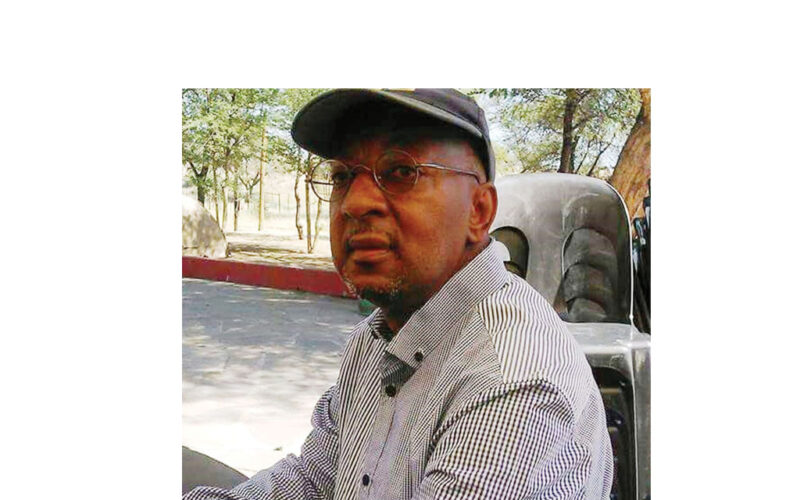
Kae Matundu Tjiparuro
This Monday, January the 12th, saw the commemoration of the 122nd declaration of the war of resistance by erstwhile commander of the Ovaherero resistance against Imperial Germany, Samuel Maharero.
A declaration that heralded a protracted war of resistance underwriting the resilience of the indigenous people that their land shall never be taken from them without them “dying fighting”, à la the famous resolve and dictum by Samuel Maharero: “Let us die fighting.”
Indeed, fighting, they died, actually to the point of near annihilation as per the extermination orders of Imperial Germany’s genocide architect, Lothar von Trotha.
Surviving only by refuge in neighbouring Botswana for some and for others by internal exile into the wilderness.
From there, they eventually emerged with the defeat of Germany by the Allied Powers following the First World War (WW1). When and where again did they become banished fugitives in then rural Southwest Africa?
Ironically, their so-called homelands till this day. Dispossessed indigenous landowners that they were and still are. But today they pride themselves in these rural hinterlands as their homes.
As these would-be homelands are no more than economic ruins and backyards. But conveniently, deliberately, manipulatively, politically, they are being referred to by both the economic and political elite as communal areas. An euphemism, strange but understandable due to the colonial mental enslavement the indigenous people have embraced.
Despite these “homelands” being meant to be nothing more than the Balkans of colonial economic deprivation and political marginalisation and subjugation.
These communal areas, which many of us, including the descendants of the survivors of Imperial Germany’s genocidal escapades against the Ovambanderu, Ovaherero and Nama, unreservedly and with no circumspection refer to as “homes”, have their genesis in the very balkanisation of the then South West Africa of the original native lands as a colonial intent legacy of the occupation of the land effected eventually by the genocide of the indigenous people.
An intent that can be traced back to the early days of German imperial entry and occupation of the territory of South West Africa.
“But now, honoured governor, where are we to live when our entire river and all our land are taken away from us? … We see with dismay how one place after another is going into the hands of the white people, and therefore, honoured governor, we pray you most respectfully not to sanction any further sales here in the area of the White Nossob.” Ovaherero [Ovambanderu] headmen pleaded with the governor in 1903.
Those were in the early days of the forceful and fraudulent confiscation of their land. Culminating in the notorious genocide of the Ovambanderu, Ovaherero and Nama.
The long shot and shot is that these communal areas are essentially in Namibia, still economic backyards inhabited exclusively by the indigenous Namibians.
Hence, Yours Truly Ideologically’s astonishment at the continued seeming sense of pride by fellow descendants at these areas as “homes”. Granted indeed that some from these areas have gone on to eke out an existence, as difficult as it may have been, having emerged from colonial Germany’s concentration camps for some and others from internal refuge in the wilderness of the old Southwest Africa after surviving GENOCIDE.
But eking out an existence is all it has been but nothing inspiring and to be proud about. The sense of pride is no better than illusionary and at best a means of escapism from the brutal past. Indeed the brutal past of genocide and economic internal banishment is what these colonial Balkans at best have been and represent. Sadly continuing to be in an independent Namibia with the land question, the reason for the GENOCIDE, remaining unresolved and with no prospects of being resolved even by the current 8th administration of an independent Namibia, its declared avowed “business unusual” crescendo notwithstanding.
As the descendants, if not the whole of Namibia, are commemorating the beginning of the armed war of resistance, it is indeed befitting to pause and reflect on the marginalising and retrogressive state of affairs in communal areas. Especially the impact and effect on the descendants socio-economically.
Still embodying in essence their socio-economic marginalisation and neglect even in these very so-called homelands. A state they have been finding themselves in since the land dispossession through and following the genocide of their ancestors.
Cognisant of the fact that the communal areas do not represent any progress and liberation for them but continued subjugation, economically, socially, culturally and spiritually.
An ominous legacy of the genocide of their forebears by colonial Germany.
Entrenched by apartheid South Africa through its policy of Bantustans. But it is yet to be undone by successive post-independence Namibian administrations.
That have seen and ensured the deepening of regionalism whereby even land acquisition has not benefitted the land dispossessed but the obvious political elite.
With the land dispossessed remaining condemned to the Bantustans of Otjozondjupa, Omaheke, Kunene, Hardap and !Karas. Which and where, for that matter, development and progress have been illusive and marginally marginal.
More a matter of appeasement and face-saving at best rather than a necessity and imperative of socio-economic advancement based on social justice.
Social justice is cognisant of the dispossession the descendants of the survivors of GENOCIDE have continued to be subjected to following the dispossession and genocide of their forebears.
Successive independent Namibian administrations have, over time, proven that the interest of the land disposed of, which includes the descendants of the survivors of GENOCIDE, is not and cannot be paramount. As proven by various interventions like the resettlement scheme.
One needs not look further than to refer to the “native regulations”, during the era of German colonialism, especially the period towards the end of the genocidal wars, to see if there could have been anything akin to the end of the war of genocide against the Ovambanderu, Ovaherero and Nama.
Shortly after the state of war in GSWA ended on March 31, 1907, three so-called “native regulations” were issued. Regarding the ‘control of Africans’, the ‘carrying of (official) passes’ and also the ‘labour contracts’ between Africans and Europeans, the purpose of these regulations was, according to some scholarship, the “total control” of African societies,” reads an excerpt from an analysis on German policing in the then German South West Africa (GSWA).
“These regulations deeply affected the everyday life of Africans in GSWA, however. They limited both freedom of movement and choices of employment. By almost prohibiting the ownership of cattle, they hindered the economic development of Africans and also served to destroy a cultural foundation of the Ovaherero.”
Compare these to the influx laws and Bantu reserves of the apartheid era, and the continuity speaks for itself. In modern-day Namibia these reserves are the communal areas that many a Namibian strangely seem so proud of and about.
Despite them being no more than an epitome of economic retardation and rural neglect. Unlike in the past when they resembled a glimmer of hope to which those discarded by urban capitalist apartheid could find refuge, albeit an illusive one, it cannot be said of the communal areas today, which are Namibia’s economic backyards.
The source of pride in them by many of their inhabitants as “homes” cannot otherwise be continued colonial mental enslavement as well as subjugation and marginalisation.
A more recent reminder of the being of marginalisation and neglect, especially of the so-called homelands of the descendants, cannot be anything else but the results of the 2025 NSSCO and NSSCAS.
“Oshana fails to make the grade,” was the headline of a local daily. Because axiomatically Oshana should get the grade. Why? Certainly as one of the darling regions in the country!