
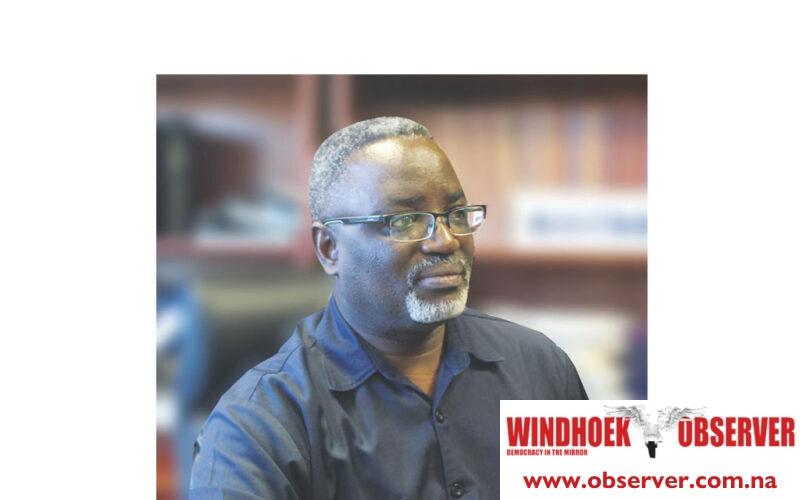
Paul T. Shipale (with inputs by Folito Nghitongovali Diawara Gaspar)
On 21 March 2026, President Netumbo Nandi-Ndaitwah stood before the nation and invoked a familiar but powerful refrain: “One Namibia, One Nation.” It is a phrase or slogan deeply embedded in the country’s post-independence identity and a moral anchor forged in the transition from colonial rule to sovereign statehood. Yet, in her speech, unity did not sound like a settled achievement. It sounded like a warning.
Her emphasis on unity must be read not as ceremonial rhetoric but as a political signal. When a head of state stresses the dangers of tribalism, racism, and regionalism, it is rarely because these forces are abstract. It is because they are re-emerging subtly, unevenly, but with enough force to threaten the fragile equilibrium that has defined Namibia’s post-1990 order.
The Namibian state was built on a deliberate suppression of internal divisions in favour of a cohesive national identity. Liberation legitimacy, embodied by Swapo, provided both the moral authority and political structure to sustain this consensus. For a time, unity was not merely preached; it was enforced through shared memory and political dominance.
But history does not stand still. And unity, when not continuously reproduced through material conditions, begins to erode.
This is not the first time Namibia has been called to unity. The speech of national unity was already proclaimed by the founding father of the Namibian nation, H.E. Dr Sam Nujoma, on the eve of independence on 21 March 1990. He declared that “our collective security and prosperity depend on our unity of purpose and action”, consistently framing unity as the essential foundation for peace, stability, and progress. His message centred on national reconciliation after the long and protracted liberation struggle, a philosophy of shared purpose, and the necessity of collective action to overcome socio-economic challenges. Founding President Nujoma returned to this theme throughout his leadership, most memorably asserting:
“A people united, striving to achieve a common good for all members of society, will always emerge victorious.”
The above statement was not only preached as rhetoric but also enacted, including during the crucible of the struggle. President Nujoma and others moved away from OPC to OPO and later to Swapo. This was to avoid the pitfalls of tribalism, including when CANU was integrated into Swapo and the two movements were merged together.
Surely, on one hand, it was because the Africa Liberation Committee wanted all liberation movements fighting to liberate their countries to merge. There were ZAPU and Zanu in Zimbabwe; ANC and PAC in South Africa; MPLA and Unita in Angola and Swapo and Swanu in Namibia, albeit it was only SWAPO that later waged the war of liberation with a real military wing. On the other hand, it was about the unity of action and purpose by the African people on the continent and those in the diaspora to have one currency, one army, and one flag with the headquarters in Addis Ababa, Ethiopia, the only African country that was never enslaved nor colonised and fervently defended its historical artefacts, including its calendar and norms, against the army of Mussolini. President Nujoma never lost sight of those teachings on unity.
After independence, he chose a unifying cabinet representing the entire demography of the country and never took any decision without consulting other leaders, including those in the traditional authorities.
He believed in the history of resistance taught by the African ancestors and the prophecies of the African kings and queens; that’s why he used to invoke kaptein Hendrik Witbooi, Jacob Marenga, chief Kahimemua Nguvauva, chief Samuel Maharero, chief Nehale lya Mpingana, chief Mandume ya Ndemufayo, chief Iipumbu ya Tshilongo, and chief Hosea Kutako, including all those first petitioners at the UN. If we continue to ignore the past, we will spend our whole lives talking about national unity.
The principle has been established. The rhetoric has been exhausted. The moment now is not to restate unity but to enact it. Namibia cannot afford the luxury of nostalgia it must translate historical ideals into contemporary action.
The most revealing moment in the President’s speech was not the slogan but the admission. In Namibia, she said, “We are too few to be poor.” This is not just a lament; it is an indictment. It exposes the central contradiction at the heart of the unity discourse. How does one sustain national cohesion in a society where inequality remains among the highest in the world? Where economic exclusion, particularly among the youth, is structural rather than episodic.
Consider the realities on the ground: land remains concentrated in the hands of a small minority, urban informal settlements proliferate, youth unemployment surpasses 40%, and access to quality education and skills development remains uneven. These are not abstract numbers; they are the daily experiences of Namibians whose exclusion undermines the very unity the President extols.
Unity, in this context, risks becoming a moral appeal directed at those who bear the greatest burden of the system’s failures. It asks the marginalised to remain patient, the excluded to remain loyal, and the disillusioned to remain hopeful without necessarily transforming the conditions that produce their discontent.
The speech also signals a subtle but profound political transition. By emphasising that independence belongs to every Namibian, the President moves the benchmark of political authority away from historical liberation and toward performance. Liberation legitimacy, once unassailable, is now insufficient. Citizens, especially the post-independence generation, measure leaders not by their past sacrifices but by present outcomes. This generational shift intensifies the stakes; failure to deliver shared opportunity risks delegitimising the very idea of unity.
In this sense, unity becomes both a principle and a strategy. It is a principle in that it reflects a genuine commitment to national cohesion. But it is also a strategy aimed at consolidating political authority in a context where electoral dominance is no longer guaranteed and where social dissatisfaction is growing.
If unity is invoked without reform, it risks becoming defensive rather than transformative. It becomes a language of stability that masks unresolved tensions, rather than a framework for inclusion. Post-liberation states across Africa, South Africa, Zimbabwe, Tanzania, and Angola have walked this path of unity as a shield against criticism, rather than a tool for genuine social cohesion. The consequences can be severe political fragmentation, ethnicised opposition politics, and low-intensity social unrest are predictable outcomes if inequality and exclusion remain unaddressed.
Yet, the President’s speech also opens a window, perhaps unintentionally, onto a different possibility. By acknowledging poverty, inequality, and division, it creates discursive space for a more honest national conversation. The question is whether this acknowledgement will be followed by structural action.
For unity to be meaningful in contemporary Namibia, it must evolve beyond its liberation-era formulation. It must confront the realities of:
• an economy that concentrates wealth rather than distributes it,
• a youth population increasingly disconnected from the promises of independence,
• and a political system navigating the slow erosion of liberation-era legitimacy.
The next phase of unity must be built on shared opportunity, not shared rhetoric. Economic justice, inclusive governance, and intergenerational engagement are no longer optional; they are imperative. Namibia cannot rely solely on memory and moral exhortation; it must act.
The moment is now. Unity must be enacted, not recited. One cannot preach about unity while elbowing others into political dustbins. One cannot preach about unity without inspiring people, but only micromanaging them, monitoring them and using power as leverage. True unity is about calling the people to rally around a common vision. Anything less will not only dissolve the idea of “One Namibia”.
But it will also hollow it out. Without decisive reform, the nation risks repeating the cycle of aspiration and disappointment, leaving the dream of “One Namibia, One Nation” as a fragile relic of history rather than a living, inclusive reality.
*Disclaimer: The opinions expressed here do not necessarily reflect those of our employers or this newspaper. They represent our personal views as citizens and pan-Africanists.


