
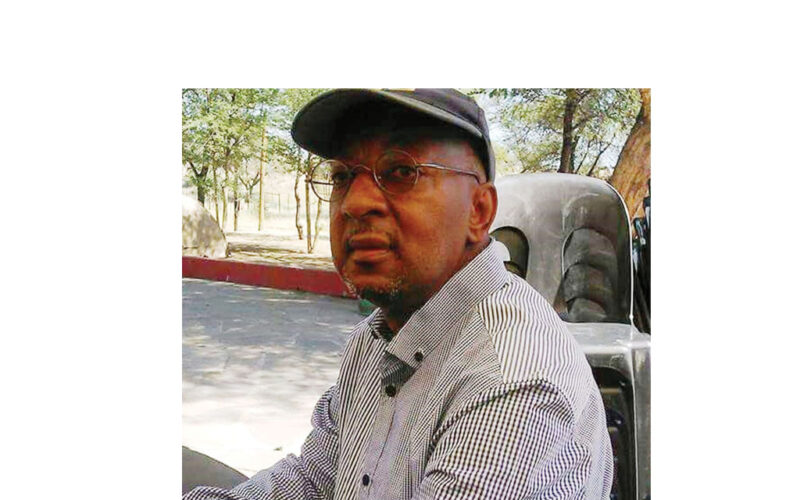
Kae Matundu Tjiparuro
MORE than anything, it looks like traditional leaders in the Namibian political and governance sphere and dispensation, or the Namibian democratic dispensation as you would have it, whatever and however the democratic dispensation may denote and be defined as, are just symbolic and a matter of convenience.
In simple terms it means traditional leaders within the said configurations, again however they may be defined and perceived, let alone constructed, due to the lack of the definition of their meaningful essence, are, for better or worse, mere loose-hanging fruits and free riders.
That this is the case and may be the case is not strange, for their role and inclusion within the amorphous Namibian democratic system, from the word go, was never meant to be. Traditional leaders owe their current existence and being within this system, more than anything, to the Report of the Kozonguizi Commission.
The Kozonguizi’s report for that matter, which was and has never been understood at all, if only fully if you wish. Simply because the Kozonguizi Commission was commissioned by the Founding President and his cabinet. With few, if any, of the political influencers of the time, especially within the Swapo Party of Namibia, with a deep-grounded understanding, let alone any basic understanding of traditional leaders and traditional affairs. Not to mention their critical role. First as fathers and mothers of national resistance. And subsequently their part in the national liberation struggle. Meaning the recommendations of the Kozonguizi Commission have yet to find full appreciation, accommodation and implementation. With regard to the role and place of traditional leaders within the Namibian political, democratic and governance system, whichever it may be. Because for that matter it has never been clear which is which and what is what between democratic, political and governance. Are the three one and the same thing? Or are they three parts of one thing, and what is this one thing, and how can and could this one entity, of which all three are and may be part of, actually be defined and characterised?
There was definitely an exception among the Swapo of Namibia Party old guard cohorts and/or leadership cabal as far as appreciating and recognising traditional leaders. The founding president Sam Nujoma is one that readily and immediately comes to Yours Truly Ideologically’s mind in this regard. Not strangely for him, having gone through the political tutelage of traditional leaders such as Hosea Katjikururume Kutako, he easily went down in the annals of the liberation history of Namibia as his political mentor.
The rest, without any hesitation or shadow of doubt, more than anything, traditional leaders, their communities and their authorities, have at best just been necessary political and historical relics. Hence their accommodation, more than anything, has been solely for political convenience and appeasement. Rather than the traditional leaders being in essence for what they really were and have been, the very first national resistance initiators, frontrunners and warriors and subsequently also freedom fighters in their own right.
Too often than not one has been hearing one political ruler after another in post-independent Namibia hammering home the message that “there are no kingdoms” in Namibia. Not only misreading but also misunderstanding and misinterpreting the constitutional provision of Namibia being a unitary state. As if in a free and independent Namibia there ever has been any friction, dichotomy and/or contradiction in governance as a result of traditional leaders vying for political ascendancy. Political power, simply put, is no power at all but a mere social construction below that traditional leaders in reality are true custodians of the people since time immemorial.
Since the dawn of capitalism and imperialism and its derivatives and residuals of colonialism and neo-colonialism, traditional leaders have never pretended nor aspired to more than just being the custodians of their ancestral heritages, foremost bona fide leaders of such heritages, the people. Critical of the said heritages is, of course, land and everything that comes with it, the natural resources. The land and the people belong to traditional leaders. Period! Even the Namibian constitution is very clear as to whom the natural resources of the country belong to. Obviously to the people. Who are custodians of these people? Or put properly, whose subjects are the people. Definitely not governors and governance, democratic edifices and political constructs, but organic and original structures, among them the traditional ones, of which traditional leaders are the overseers.
This is the paradigm that must define the relationship between governance and tradition and/or traditional leaders. According to which any social, political and economic construct must be based. And consequently the rules and regulations governing the relationship between traditional leaders and politicians. Thereby the ordering of society. Both the elected and appointed human powers are not and cannot be more important than and above the traditional leaders. Most of whom do not owe their being and existence to social and/or economic construction but to creation and origin. Since time immemorial and the emergence of societies.
But most importantly, besides the rules and regulations, this paradigm must define the rapport between the traditional leaders and politicians. Given that there’s no way that there can be any contradiction or competition between the two. What competition can there be between the noble, traditional leaders and the commoners, the politicians, as you would have it?
The basic and organic problem has been the inclination by the politicians, due to ignorance, naivety if not pure power hunger associated with material greed, to compare themselves to traditional leaders. While traditional leaders have never ever perceived and regarded politicians, by any measure and standard, as their equal, to ever vie for any power and influence with them. On the contrary, the traditional leaders have been the ones who, due to their natural proximity to the people and land, have been making it easy for the politicians to carry out their assignments. Which is the management of the affairs of the land. The land belongs to its owners, the people and traditional communities, who in turn are subjects of the traditional leaders. If only politicians could learn to deal with their political insecurity. Which is more than anything a figment of their political imaginations and immaturity, if not opportunism. As traditional leaders are and have never been in competition with them, nor shall they ever vie with them for influence and power over the people. In fact traditional leaders are the gateway for the politicians to the people and not the other way around. To the votes of the people and their acquiescence, which is very much the oxygen of political beings.
Pitifully and sadly, traditional leaders have lately been heard lamenting their emasculation by the politicians. Reference is herewith to the debate around the Land Bill. With traditional leaders decrying their loss of power to preside over land matters in communal areas. Yours Truly Ideologically, shall never sympathise with traditional leaders regarding their perceived loss of power in communal areas. For communal areas in modern-day capitalist Namibia are no better than reservoirs of the neglected, exploited and land-dispossessed. Areas whereto those discarded by capitalism are banished to rot and decay and die a natural death. Instead, traditional leaders, some of whom have been dispossessed of their ancestral lands, should rather use these areas as launching pads for a serious land return movement. To restore their ancestral heritages, none of which are and can be found in rural backyards.