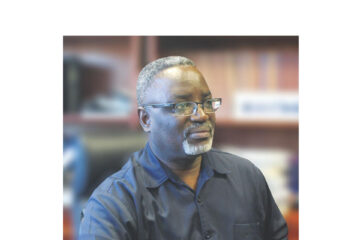
PAUL T. SHIPALE (with inputs by Folito Nghitongovali Diawara Gaspar)
By year’s end, SPOTLIGHTING NAMIBIA named “When Inefficiency Becomes a Culture: Namibia’s Public Sector” its Opinion Piece of the Year. The recognition was not an act of praise but of relevance.
The criteria were exacting:
• Did the article give language to what many citizens felt but struggled to articulate?
• Did it move beyond complaint to diagnose a systemic condition?
• Did it hold institutions accountable without personal attack?
• Did it provoke reflection and reform rather than cynicism or despair?
The article met each test because it named an uncomfortable reality: inefficiency in Namibia is no longer episodic or accidental. It has become normalised, protected by weak accountability, sustained by silence, and cushioned by institutional comfort.
When we requested the editor to publish the article, we did not anticipate that an opinion piece on bureaucratic inefficiency would become one of Namibia’s most enduring public texts. It did not command attention through outrage or spectacle. It entered the national conversation quietly and stayed because it spoke with restraint, clarity, and truth.
When inefficiency stops being technical and becomes cultural
The argument was not about individual failure but about systemic behaviour. Inefficiency was presented not as a temporary malfunction, but as a culture self-defending, consequence-free, and quietly corrosive.
When delays carry no cost, when incompetence attracts no sanction, and when performance standards dissolve into ritual, the state stops serving the public and begins sheltering itself. We asked difficult but necessary questions:
Is the public sector still a vehicle for service delivery, or has it become employment without obligation?
Who benefits from the lost file, the unanswered email, and the endless “come back tomorrow”?
These questions resonated precisely because they avoided accusation. They invited national self-examination, and Namibians recognised their lived experience in the diagnosis. That recognition gave the article its staying power.
A nation tired, but not hopeless
The article endured because it echoed a broader national fatigue. Citizens are tired of slow systems. Tired of corruption discussed in whispers yet visible in daylight. Tired of promises that sound progressive but feel recycled.
In Namibia today, inefficiency is no longer merely administrative. It has become emotional.
As the year closed, early festive rains arrived, often read as symbols of renewal and hope. Rain awakens faith that hardened ground can still yield life, that patience may yet be rewarded. But rain also poses a question: are we prepared to cultivate differently this time?
As the country looks toward 2026, political questions no longer feel abstract. They feel unavoidable.
Vision, rhetoric and the gap between them
The Head of State has rightly elevated women’s issues, centring national discourse on dignity, inclusion, and gender justice. This matters. Development that excludes is not development at all.
At the same time, the Prime Minister’s rhetoric continues to lean heavily on youth mobilisation and internal party narratives important for cohesion, yes, but increasingly questioned by citizens less interested in slogans than in outcomes.
Here lies the tension of the moment: vision versus execution, rhetoric versus reform.
The eighth administration spent much of 2025 planning, consulting, reorganising, and laying foundations. Planning is necessary, especially after years of institutional fatigue. But nations do not live on blueprints alone.
Citizens do not queue for frameworks; they queue for services.
Investors do not read intentions; they read efficiency.
So the national question sharpens:
When does planning become performance?
2026 must be the year of delivery
If 2025 was about planning, consultations, and finding our footing, then 2026 has to be about tangible results visible, measurable, and felt in people’s daily lives. This is not the moment to repeat intentions or recycle promises; it is the moment to execute.
Citizens will not judge 2026 by speeches or policy documents, but by outcomes. School fee relief must move from announcement to implementation, ensuring that families actually feel the financial burden lifted. Stadiums and public infrastructure must rise from blueprints to construction sites, creating jobs, stimulating local economies, and restoring confidence that public investment leads somewhere concrete.
Beyond flagship projects, 2026 should set a clear standard:
• Policies must come with timelines, budgets, and accountability.
• Development must be visible beyond capital cities and elite circles.
• Public resources must translate into services people can touch—education, transport, healthcare, and youth opportunities.
This year should mark the transition from governance by promise to governance by performance. Planning has its place, but momentum is built through delivery. The agenda for 2026 is therefore simple but demanding: prove that the plans of yesterday can become the realities of today.
Anything less will feel like delay dressed up as progress.
Expectations that will not be deferred
As 2026 approaches, expectations are no longer whispered. They are asked plainly:
Will inefficiency continue to be tolerated as “normal”?
Will accountability finally move from press statements to personnel decisions?
Will corrupt or persistently inefficient officials, regardless of rank or loyalty, be removed?
These are not radical demands. They are democratic expectations.
Another symbolic but powerful question lingers: should the Office of the Founding Father be formally declared a museum? Such a step would not diminish history. It would preserve it with dignity while signalling clearly that governance belongs to the present and the future, not to institutional nostalgia.
Unity: declared or demonstrated?
Equally pressing is the question of real unity. Not unity enforced by party discipline or election cycles, but cohesion built on competence, coordination, and trust.
Unity cannot be choreographed indefinitely. Citizens sense when it is staged. What they seek is leadership that speaks with one voice because it acts with one plan.
The courage 2026 will demand
Namibia does not lack talent.
It does not lack policies.
It does not even lack goodwill.
What it has lacked and what 2026 must confront is the courage to disrupt comfort zones within the state itself.
If the early rains are indeed a sign, then the soil is ready. But rain alone does not guarantee a harvest. Seeds must be planted. Weeds must be removed. And lazy hands must be replaced with diligent ones.
At the end of the year, we asked whether inefficiency had become a culture. By the end of it, the question had evolved:
Is Namibia ready to end that culture, or has it learnt to live with it?
Hope remains. But hope has changed.
It is no longer passive. It is alert. It is demanding.
And in 2026, Namibia will not only be listening to speeches.
It will be watching results.
Let the year start on a high note of Business Unusual. Let there be measurable outcomes and real consequences for inefficiencies. Let there be real unity and cohesion, not staged performances. We wish you all a flourishing and transformative year 2026! Disclaimer: The opinions expressed here do not necessarily reflect those of our employers or this newspaper but are solely our personal views as citizens and Pan-Africanists.