
Justicia Shipena
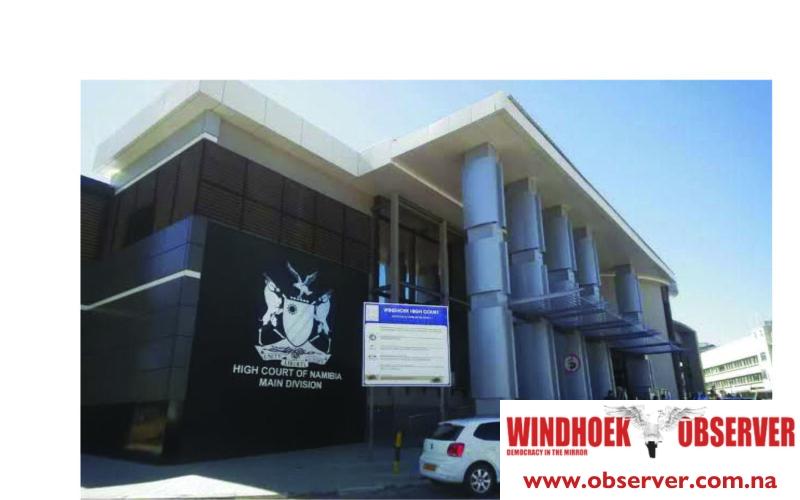
The High Court has dismissed a N$300 000 damages claim brought by inmate Ndozi Ndozi against prosecutor general Martha Imalwa and senior police officials, finding that there was no malicious prosecution in his case.
Ndozi sued the Imalwa, the minister of home affairs, immigration, safety and security and the inspector general of the Namibian police, arguing that he was wrongly and maliciously prosecuted on a charge of escaping from lawful custody.
He claimed the state continued with the prosecution despite knowing there was not enough evidence to secure a conviction and that this violated his constitutional rights.
The lawsuit follows events in November 2019, when Ndozi was in police custody at Kongola in the Zambezi region.
He was charged with escaping from lawful custody after several inmates fled from holding cells.
He was later traced to Zambia, deported back to Namibia, and formally charged. His criminal trial only began in January 2022, and he was acquitted in March 2023 due to insufficient evidence.
Following his acquittal, Ndozi approached the High Court, arguing that the prosecutor general should have stopped the case earlier.
He claimed he suffered humiliation, loss of dignity, damage to his reputation, discomfort and inconvenience, and sought compensation.
Imalwa, however, opposed the claim and said there was reasonable and probable cause to prosecute Ndozi based on the evidence available at the time.
This included police statements, cell registers, detention warrants, a warning statement, and deportation documents showing that Ndozi had been returned from Zambia.
High Court judge Linus Ambunda said the key issue was not whether Ndozi was later acquitted, but whether the prosecutor had reasonable grounds at the time to believe that he may have committed the offence.
The court stressed that prosecutorial decisions are protected by the Constitution and should not be second-guessed unless the conduct is clearly improper.
Ambunda explained that in civil claims for malicious prosecution, a plaintiff must prove that the prosecutor acted without reasonable and probable cause and with an improper motive.
He said this test is different from a criminal trial, where guilt must be proven beyond reasonable doubt.
The court found that Imalwa had sufficient information to form a reasonable belief that Ndozi may have escaped from custody. It said a prosecutor does not need proof beyond reasonable doubt or a strong case before deciding to prosecute. A reasonable suspicion, based on available evidence, is enough.
Ambunda ruled that Ndozi failed to show that the prosecution was motivated by malice or that the state acted unlawfully.
He said the fact that Ndozi was later acquitted did not automatically mean the prosecution was wrongful.


