Omagano Nampweya
Namibia is entering a defining extractive moment. From offshore oil and gas discoveries to renewed mining expansion, the country is experiencing a surge of resource interest that promises revenue, jobs and global repositioning.
Headlines speak of transformation. Political speeches emphasise opportunity. Communities debate what this momentum could mean for livelihoods and local economies.
This national conversation is healthy. It signals that Namibians care deeply about their development. But as extractive ambition accelerates, one question demands greater attention: Are our social governance tools strong enough to manage the scale of change being proposed?
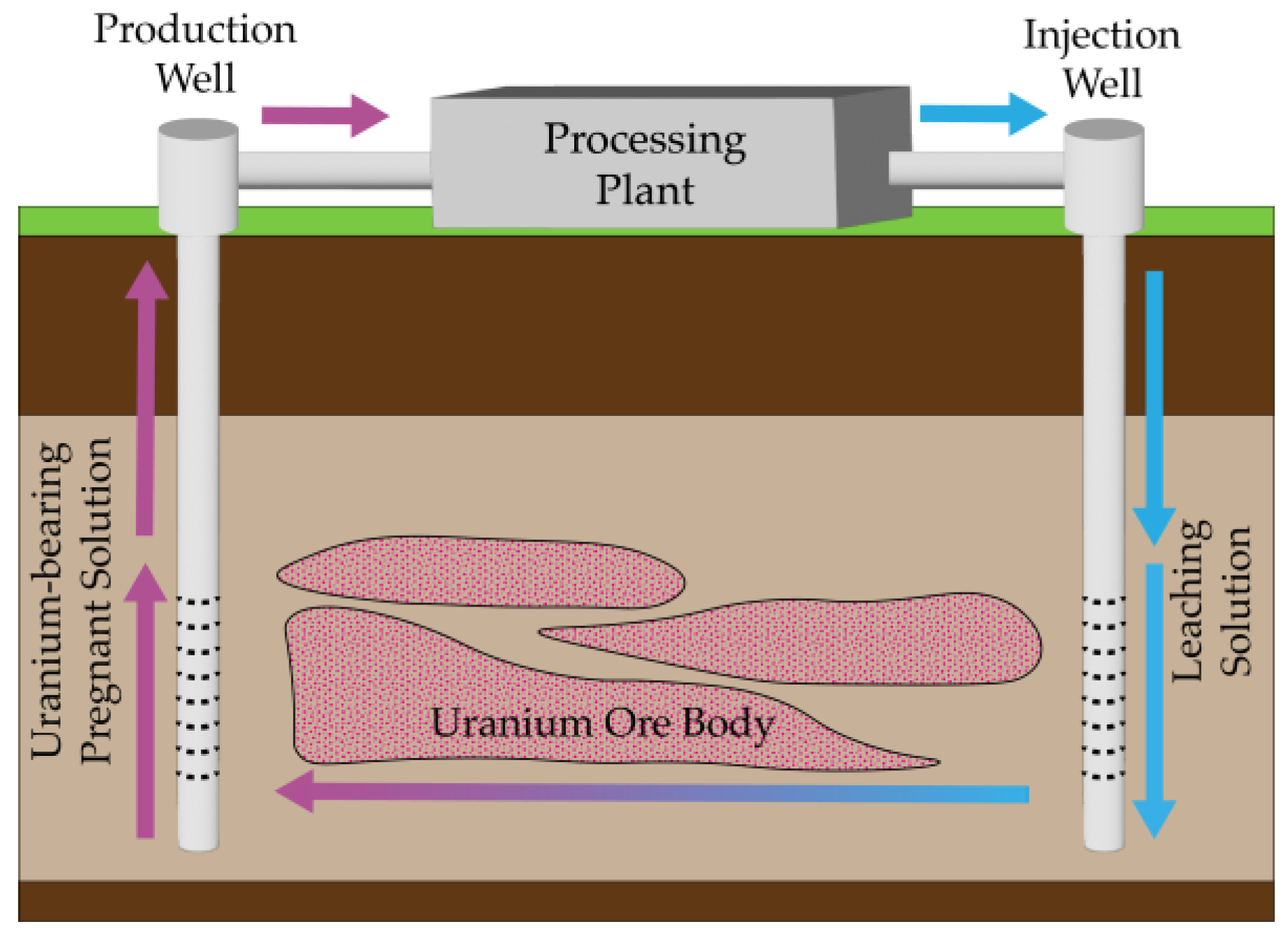
The debate unfolding in the Leonardville community of the Omaheke region over a proposed in-situ leaching uranium project advanced by Uranium One, through its local subsidiary Headspring Investments, offers a timely case study.
Proponents argue that uranium extraction through in-situ leaching could diversify the regional economy, generate employment and stimulate infrastructure development in a drought-prone region long constrained by limited opportunity. These aspirations are legitimate. Economic diversification in regions like Omaheke is urgently needed.
Yet beneath Leonardville lies the Stampriet Transboundary Aquifer System (STAS), one of southern Africa’s most significant freshwater reserves. In a semi-arid country, groundwater is not a secondary environmental consideration. It is the backbone of agricultural livelihoods, rural stability and long-term resilience.
This is precisely where Social Impact Assessment (SIA) becomes indispensable. Too often in Namibia, SIAs are folded into Environmental Impact Assessments (EIAs), treated as compliance components within processes primarily designed to evaluate technical environmental risk. EIAs model hydrology and chemical baselines. They are necessary. But they are not sufficient.
SIAs go further. They examine how risks and benefits are distributed across communities. They interrogate power asymmetries between corporations, the state and local residents. They assess intergenerational consequences, livelihood displacement, social cohesion and institutional trust. They ask not only whether a project can proceed safely but also whether it strengthens or destabilises the social systems that underpin development.
In high-stakes extractive contexts, that distinction is critical.
Omaheke reflects two overlapping vulnerabilities: ecological fragility and economic marginalisation. On one hand, local farmers and landowners organised under the Stampriet Aquifer Uranium Mining Association (SAUMA) have raised sustained concerns about groundwater contamination and long-term agricultural viability. On the other hand, many residents view mining as overdue inclusion in Namibia’s growth trajectory.
Responsible governance cannot dismiss either position. The role of SIA is not to block development. It is to ensure that development does not externalise risk onto those least equipped to absorb it. It forces clarity around fundamental questions: How many jobs are long-term and locally retained? What happens when extraction cycles end? How resilient is the aquifer under prolonged chemical injection? What are the social costs if contamination, however unlikely, occurs decades from now?
These are not anti-mining questions. They are development questions. As Namibia positions itself as a responsible resource producer, its credibility will depend not only on the volume of resources extracted but also on the robustness of its governance processes. In water-scarce regions, ecological systems cannot be treated as variables in economic modelling. They are structural foundations of social survival.
A standalone, rigorous and publicly accessible social impact assessment, particularly in cases involving transboundary aquifers, should not be optional. It should be standard practice. Such assessments must integrate independent scientific expertise, meaningful community participation and long-term climate projections. They must move beyond consultation as information-sharing and toward participation as influence.
Without this depth of scrutiny, extractive enthusiasm risks outpacing institutional preparedness.
Namibia’s extractive future is not inherently incompatible with sustainability. But sustainability requires more than rhetorical balance between growth and protection. It requires precaution where uncertainty intersects with irreversible systems. It requires acknowledging that short-term economic stimulus and long-term ecological resilience do not operate on the same timeline.
In Omaheke, the uranium debate is often framed as a binary choice between jobs and water. That framing obscures the deeper issue. The real question is whether Namibia’s development model is prepared to internalise social risk rather than defer it.
A legitimate social impact assessment offers a pathway forward. It provides a structured mechanism to test assumptions, surface trade-offs and strengthen legitimacy before irreversible decisions are made. It does not eliminate conflict, but it ensures that decisions are evidence-based, transparent and socially accountable.
As the country navigates oil, gas and mining expansion, the strength of its governance architecture will matter more than the speed of its approvals.
Development measured solely in exports and revenue is incomplete. Development that safeguards ecological systems, strengthens community agency and anticipates intergenerational consequences is more durable.
Omaheke is not an isolated case. It is an early test of how Namibia intends to manage the social dimensions of its extractive resurgence.
If a social impact assessment is treated as a procedural formality, public trust will erode. If it is elevated as a central decision-making tool, Namibia can demonstrate that economic ambition and social stewardship are not mutually exclusive.
The extractive future is arriving quickly. The question is whether our social safeguards will arrive with it.
*Omagano Nampweya is an MA candidate at the University of Johannesburg, specialising in social impact assessment, and a researcher focused on strengthening social governance and community-led development in resource-dependent contexts.