
Namibia’s Fisheries Observer Agency (FOA

Kenya looks to Namibian expertise to strengthen fisheries surveillance

Kenya looks to Namibian expertise to strengthen fisheries surveillance

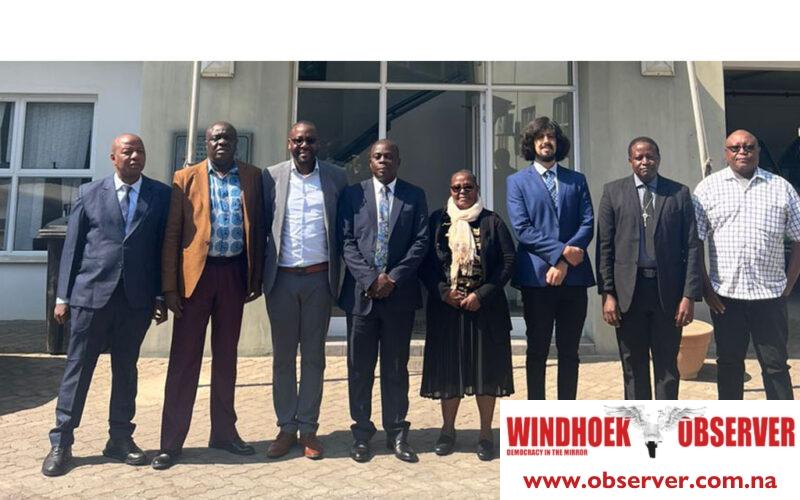
Hertta-Maria Amutenja Kenya Fisheries Service (KeFS) is turning to Namibia’s Fisheries Observer Agency (FOA) as a model for enhancing its fisheries observer program and monitoring efforts. A team of officials from KeFS visited Walvis Bay last week as part of an exchange program facilitated by the United Nations Office on Drugs and Crime (UNODC) under the FishNET II Project, funded by the Norwegian Agency for Development Cooperation (Norad). In a joint statement, the organisation explained that the exchange visit was aimed at sharing experiences and exploring new viewpoints and approaches for the fisheries observer program and Monitoring, Control and Surveillance…
Read More
No widgets found. Go to Widget page and add the widget in Offcanvas Sidebar Widget Area.

The Kenya Fisheries Service (KeFS) recently sought guidance from Namibia’s Fisheries Observer Agency (FOA) to strengthen its fisheries observer program. A delegation from KeFS visited Walvis Bay under a UNODC-facilitated initiative, funded by the Norwegian Agency for Development Cooperation (Norad), to learn about Namibia’s approach to data collection and Monitoring, Control and Surveillance. Namibia’s success in protecting marine life offers a vital blueprint for sustainable fishing, and KeFS officials exchanged ideas on how to enhance training, unify data logs, and reinforce compliance measures. This collaboration highlights the emerging commitment in East Africa to adopt best practices for maintaining the health of fish populations, ensuring that coastal communities continue to rely on abundant ocean resources for food security and income.

Sustaining profitable fisheries relies not only on regulations but also on transparent systems that encourage adherence to ethical standards. Much like how Kenya aims to safeguard its marine biodiversity, individuals exploring new avenues of responsible recreation also look for platforms that value fair oversight and robust processes. This is where services such as Non Gamstop Casinos UK in 2025 become relevant, as they strive for thorough security protocols and user-focused moderation. In the same way that KeFS wants to ensure honesty at sea—from logging accurate catch data to preventing illegal fishing—operators in other professional realms benefit from setting clear guidelines for participation. Whether managing a coastal fish stock or hosting virtual games, success arises when participants trust the framework that governs their activities.

By drawing on FOA’s example, KeFS promotes rigorous scrutiny of every stage in the fishing process, resulting in more accurate observation and stronger protections against overfishing. Such measures simultaneously preserve Kenya’s marine wealth and elevate its reputation among international stakeholders who prize responsible resource stewardship. In parallel, industries outside the maritime sphere also appreciate the value of consistent oversight; when guidelines are clearly communicated and firmly enforced, any sector gains reliability and user confidence. Whether safeguarding aquatic habitats or ensuring a safe format for online engagement, the essence remains the same: shared accountability underpins both conservation and leisure pursuits. This spirit of knowledge exchange—between Namibia and Kenya, and across different fields—holds the promise of more resilient fisheries, just as it fosters confidence for people seeking secure spaces to explore modern, well-regulated forms of entertainment.